

Calciphylaxis is one of the few conditions in which a wound-care referral to a hyperbaric unit can feel like a last throw of the dice. The disease calcifies and occludes the small arterioles of the skin and fat, the skin above them dies in painful, purple, net-like patches, and the ulcers that follow are notoriously slow to heal and quick to become infected. Most patients have advanced kidney disease and many are on dialysis. For decades, textbooks quoted one-year mortality of somewhere between 45% and 80%.
Hyperbaric oxygen has been part of the treatment mix in many centres for twenty years, on a simple rationale: if the problem is tissue starved of oxygen by blocked vessels, raising the oxygen dissolved in plasma might keep the wound bed alive while everything else is corrected. Two recent cohorts, one from Oslo and one from Boston, report outcomes that look better than the old numbers. The question for clinicians, and for anyone running or equipping a hospital chamber, is how much of that improvement belongs to the chamber.
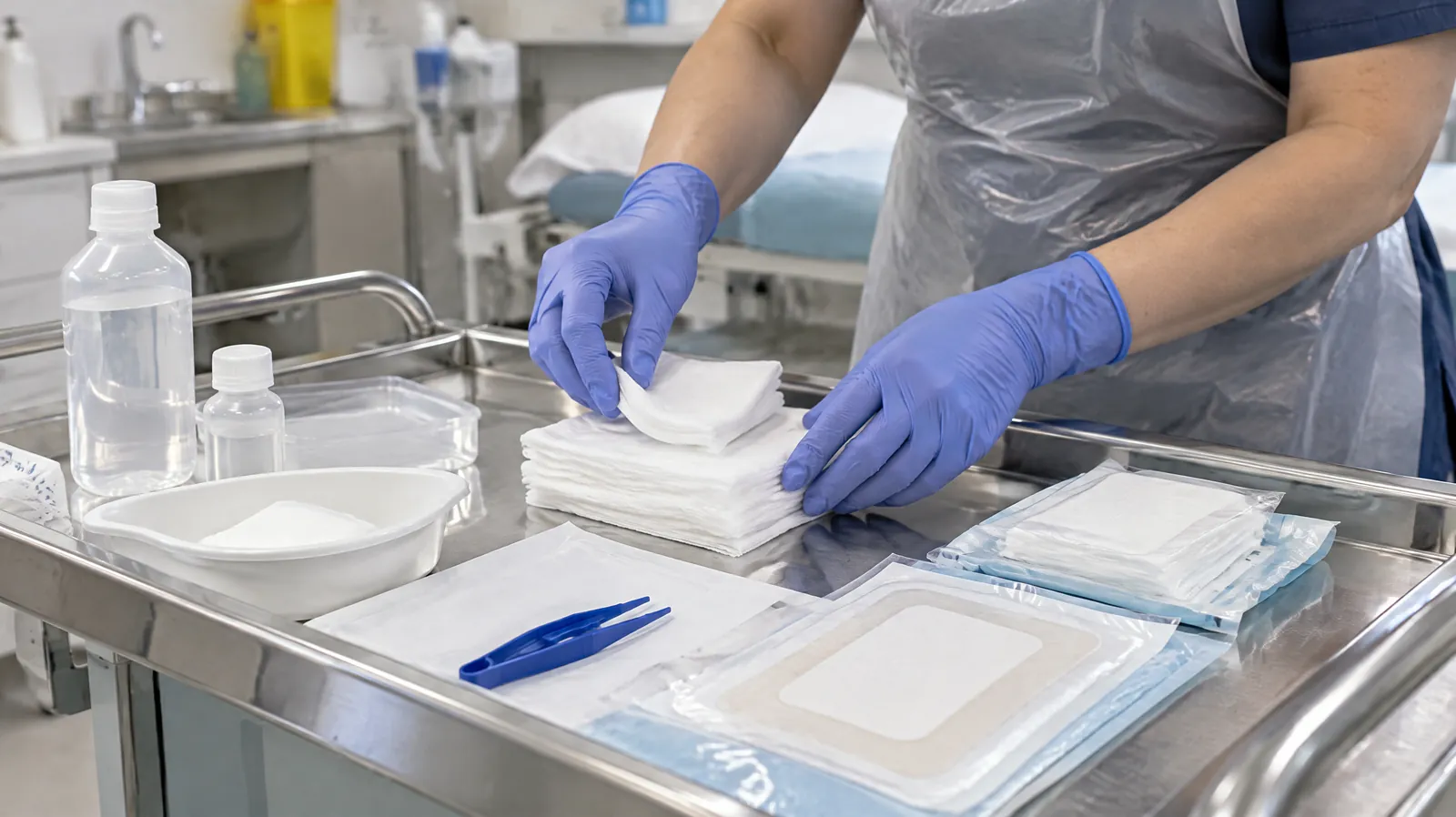
The Oslo series: 25 patients, 1,493 sessions
Oslo University Hospital added hyperbaric oxygen to its calciphylaxis pathway in 2012. In January 2025 the nephrology department published every case treated between 2012 and 2022 in Clinical Nephrology.
The headline numbers are striking. Twenty-five patients received 1,493 hyperbaric treatments between them, a median of 45 each, with a range from a single session to 267. One year after diagnosis, 18 of the 25 were alive. Fifteen of those 18 survivors had wounds that had completely resolved. Seven patients died within the year: three from cardiovascular disease, three from infection and one from cancer.
Read the methods section before the results, though, because hyperbaric oxygen was one element of a long bundle. Every patient also received sodium thiosulphate, dialysis where indicated, active correction of calcium and phosphate balance, vitamin K2 supplementation, and withdrawal of warfarin, iron and vitamin D, with systemic steroids kept to a minimum. Weight and nutrition were optimised and wound care was described as thorough. That is close to a list of everything the field currently believes matters. The authors’ own conclusion is appropriately limited: hyperbaric oxygen was well tolerated and “may be associated with beneficial effects on survival and wound-healing when combined with multidisciplinary care.”
A correction followed in May. The original paper said 10 patients (40%) had end-stage kidney disease on renal replacement therapy at diagnosis; the corrigendum puts the figure at 15 (60%). That matters more than it looks. Dialysis at diagnosis is one of the strongest predictors of death in calciphylaxis, so the corrected cohort is sicker than first described, which slightly strengthens the survival figure rather than weakening it. It also shows how fragile small single-centre baseline tables are. The same group has since published a short letter in Kidney International on calciphylaxis, kidney transplantation and hyperbaric treatment, a reminder that some of their patients’ outcomes are also bound up with transplant pathways that no chamber can provide.
The Boston cohort: more sessions, longer survival
The largest comparative dataset comes from Massachusetts General Hospital. Published in the Journal of the American Academy of Dermatology in January 2024, it reviewed 93 calciphylaxis patients: 57 treated with intravenous sodium thiosulphate alone and 36 treated with intravenous sodium thiosulphate plus hyperbaric oxygen.
Two findings stand out. Patients who completed a full course of hyperbaric treatment survived significantly longer (P = .016), and when the number of sessions was modelled as a continuous exposure, hazard ratios for death fell as the count rose through 1, 5, 10 and 20 sessions. Wound scores also improved as session numbers increased (P = .042).
A dose-response curve is the kind of result that tempts readers to infer causation, and this is where the design bites. In a retrospective cohort, the number of sessions a patient completes is not assigned. It is earned by surviving long enough, being stable enough to travel, tolerating the chamber and not being admitted with sepsis. The sickest patients die or drop out early and are counted in the low-session groups. That is immortal-time and survivorship bias in its classic form, and no amount of statistical adjustment in a cohort of 93 can fully remove it. A small 2016 US series that preceded both papers hints at the same mechanism from the other direction: of five patients treated, the two who improved were the two who managed at least 20 sessions, and the authors noted they were the ones who tolerated treatment best.
The context the headline numbers leave out
Two other pieces of evidence change how both cohorts should be read.
First, outcomes in calciphylaxis have improved across the board. A six-centre US registry published in the same journal in October 2025 followed 268 patients diagnosed between 2006 and 2022. One-year disease-specific mortality was 28.88% and two-year mortality 29.92%, well below the historic range of 45% to 80%. The authors attribute this to better understanding and care overall, not to any single treatment. The same registry identified the factors that actually predict death: penile lesions (hazard ratio 11.90), atrial fibrillation (2.41) and dialysis at diagnosis (2.02), while distal lesions on the lower legs carried much lower risk than proximal ones on the trunk and thighs (0.34). Any single-centre series with a favourable mix of distal, non-dialysis patients will look good against the old benchmark without any chamber at all.
Second, the only pooled analysis is neutral. A 2019 systematic review in Kidney International Reports gathered 147 publications covering more than 850 patients. Hyperbaric oxygen was used in 15.3% of them. In the cohort-study meta-analysis, the pooled risk ratio for death with hyperbaric oxygen was 0.89, with a 95% confidence interval of 0.71 to 1.12. That interval crosses no effect, and the identical figures for sodium thiosulphate show that the most widely used drug in the field fares no better. None of the five common treatments reached significance.
The European Renal Association’s CKD-MBD working group, writing in Clinical Kidney Journal in late 2025, takes the same line. Its comprehensive update notes reports of complete healing in about half of patients after around 44 sessions in one retrospective study, but states that the pooled analysis “did not demonstrate benefit.” It also points out that three attempted randomised trials of sodium thiosulphate have never reported results, which says a great deal about how hard it is to run trials in a rare, fast-moving disease with a high early death rate.
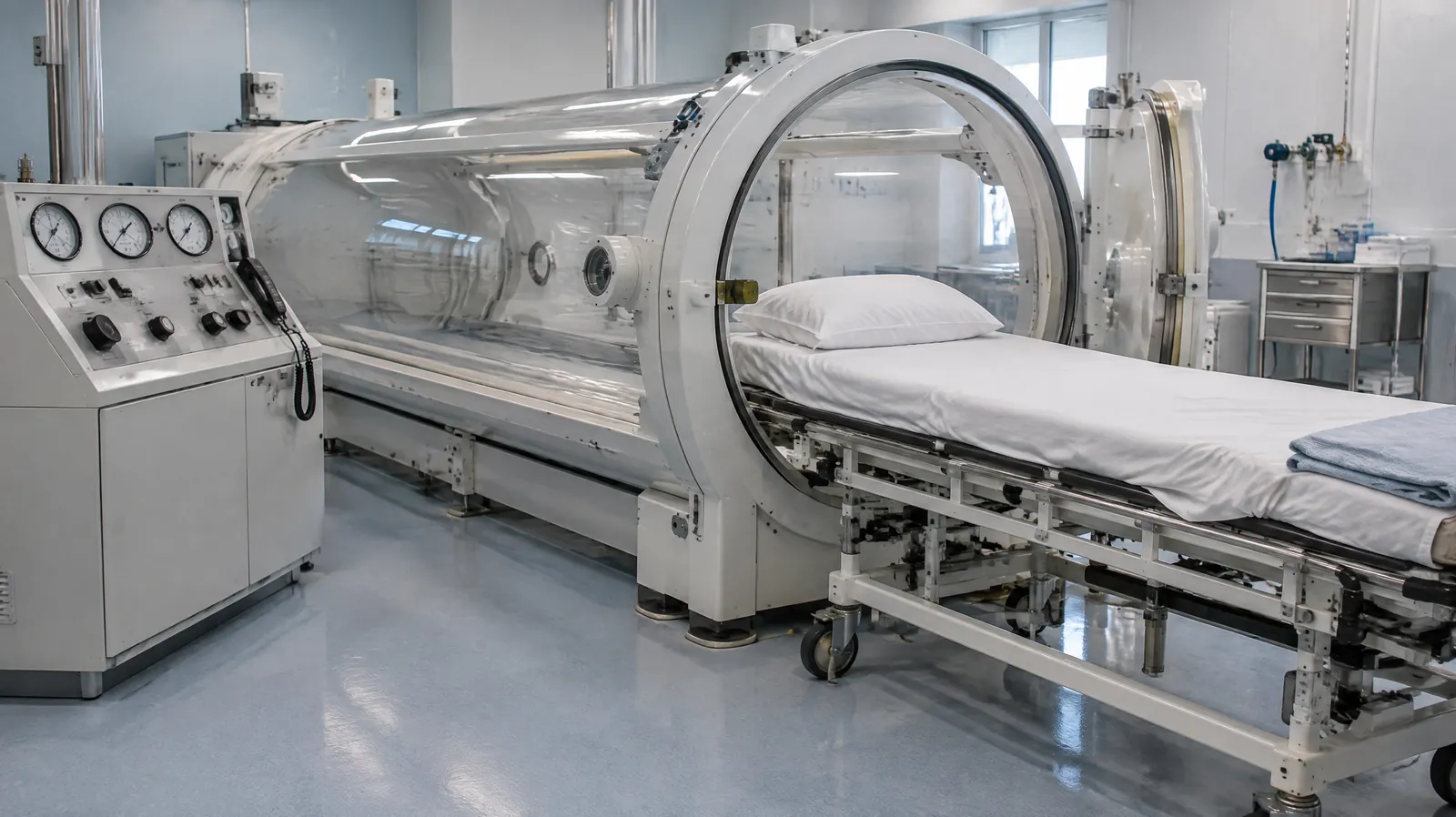
Pain may be the more defensible endpoint
The most interesting recent signal may not be about survival at all. A 2024 study from Reims University Hospital looked at 18 patients with chronic, non-healing, painful wounds who were taking level 2 or 3 analgesics, six of them with calciphylaxis. After hyperbaric treatment, 15 of 18 (83.3%) were able to step down their analgesia within a median of 3.5 months. Strong opioid use fell from 72.2% of patients to 11.1% (p = 0.005), and 15 of 18 showed local wound improvement within a median of 3.9 months.
For calciphylaxis, where pain is often the dominant complaint and opioids are poorly tolerated by patients on dialysis, that is a clinically meaningful outcome. It is also a small, retrospective, mixed-diagnosis cohort with no comparator, and the authors call for prospective, controlled confirmation.
Case reports keep the anecdotal record growing. In January 2026 an Italian urology team described a 60-year-old man on haemodialysis with penile calciphylaxis, a location the US registry links to the highest mortality. After eight daily chamber sessions given as an alternative to planned surgery, he improved within 72 hours and showed early re-epithelialisation by discharge on day nine. He died of cardiopulmonary arrest during dialysis six months later, and autopsy confirmed systemic calciphylaxis. A Norwegian case published in September 2026 describes a man in his forties with alcohol-related multi-organ failure who healed with hyperbaric oxygen, vacuum-assisted therapy, debridement and skin grafting, with his authors crediting his youth and early recovery of kidney function. Both cases illustrate what a chamber can contribute to a wound, and why the patient’s underlying disease still decides how the story ends.
How payers and guidelines treat it
Calciphylaxis does not appear as its own entry on the Undersea and Hyperbaric Medical Society’s list of indications, and it is not among the conditions covered under Medicare’s National Coverage Determination for hyperbaric oxygen (NCD 20.29). In practice, hospital units that treat it either rely on local agreements, absorb the cost, or frame individual cases under broader problem-wound reasoning, which reviewers do not always accept. A median course of 45 sessions, as in Oslo, means roughly nine weeks of daily weekday treatment. For a dialysis patient that is a heavy logistical load on top of three dialysis sessions a week, and it is one reason completion rates, and therefore the dose-response data, are so tied to how well patients are to begin with.
We covered the coverage logic for the conditions Medicare does pay for in our earlier look at diabetic foot ulcers and the Cochrane evidence, and the referral mistakes that waste chamber time in wound care sequencing pitfalls.
What this means for clinicians
For nephrologists and dermatologists, the practical reading of the current evidence is narrow. Hyperbaric oxygen appears safe in this population when delivered by an experienced hospital unit, it is consistently associated with better wound and survival outcomes in the centres that use it, and none of that association has been separated from the selection effects that come with completing a long course. It is reasonable as one component of a full multidisciplinary bundle, especially where pain and wound burden dominate. It is not a substitute for correcting mineral metabolism, stopping warfarin, treating infection and getting wound care right, and it should not delay any of those.
Barotrauma and oxygen toxicity are the main safety considerations, as with any course. Our review of the UHMS side-effect literature covers the rates in detail.

What this means for anyone equipping a chamber
The studies above come from hospital hyperbaric departments treating frail, often dialysis-dependent patients with long daily courses under medical supervision, with full access to wound surgery, infection control and emergency care. None of them describes treatment in mild, low-pressure soft-sided chambers, and nothing in this literature supports marketing such devices for calciphylaxis or any other wound condition. Facilities that want to treat these patients need the clinical infrastructure first: medical direction, trained staff, the capacity to run daily sessions for two months or more, and a working relationship with the nephrology and wound teams who manage everything else.
For the field as a whole, calciphylaxis is now in a familiar position, the same one we described for Fournier’s gangrene: consistent observational signals, a plausible mechanism, a rare and heterogeneous patient group, and no randomised trial. The Oslo and Boston groups have shown that a protocol combining hyperbaric oxygen with modern multidisciplinary care is feasible and well tolerated. Whether the oxygen itself changes survival is a question only a trial can answer, and given how hard it has proved to complete trials of sodium thiosulphate, it may be a long wait.
Sources
- Brekke FB, von der Lippe N, Røed I, Gudmundsdottir H, Braaten M, Nordheim E. Hyperbaric oxygen treatment in addition to conventional multidisciplinary care in patients with calciphylaxis. Clin Nephrol 2025;103(1):1-4.
- Brekke FB, von der Lippe N, Røed I, et al. Corrigendum for the article Clin Nephrol. 2025;103:1-4. Clin Nephrol, May 2025.
- Nordheim E, Hovd M, Dahle DO. Kidney transplantation and hyperbaric oxygen treatment for calciphylaxis. Kidney Int 2025;107(6):1113.
- Biglione B, Cucka B, Iriarte C, Locascio JJ, Goldfarb JW, Gutium A, Lima XT, Kroshinsky D. A retrospective review of outcomes after hyperbaric oxygen therapy for the treatment of calciphylaxis. J Am Acad Dermatol 2024 (published January 2024).
- Glennon CM, Xia J, Strowd L, et al. Outcomes and mortality in calciphylaxis: a multicenter update. J Am Acad Dermatol 2025;93(4):966-974.
- Udomkarnjananun S, Kongnatthasate K, Praditpornsilpa K, Eiam-Ong S, Jaber BL, Susantitaphong P. Treatment of calciphylaxis in CKD: a systematic review and meta-analysis. Kidney Int Rep 2019;4(2):231-244.
- Huish S, Moore S, Alfieri C, et al. Calciphylaxis diagnosis, management and future directions: a comprehensive update on behalf of the European Renal Association CKD-MBD Working Group. Clin Kidney J 2025;18(12):sfaf338.
- Pathault E, Sanchez S, Husson B, et al. Hyperbaric oxygen therapy enables pain reduction and healing in painful chronic wounds, including in calciphylaxis. Ann Dermatol Venereol 2024;151(4):103325.
- McCulloch N, Wojcik SM, Heyboer M III. Patient outcomes and factors associated with healing in calciphylaxis patients undergoing adjunctive hyperbaric oxygen therapy. J Am Coll Clin Wound Spec 2016;7(1-3):8-12.
- Barbiero M, Piasentin A, Bertolotto M, Rizzo M, Liguori G. Hyperbaric oxygen treatment as a therapeutic option for penile calciphylaxis. Asian J Urol 2026;13(1):124-126.
- Berdal-Sanner K, Andvik SKK, Müller B, Riisnes IO, Holsen DS. Calciphylaxis in liver disease and acute kidney failure [Norwegian]. Tidsskr Nor Laegeforen 2026;146(11).
- Undersea and Hyperbaric Medical Society. Hyperbaric Oxygen Therapy Indications.
- Centers for Medicare & Medicaid Services. National Coverage Determination 20.29, Hyperbaric Oxygen Therapy.