
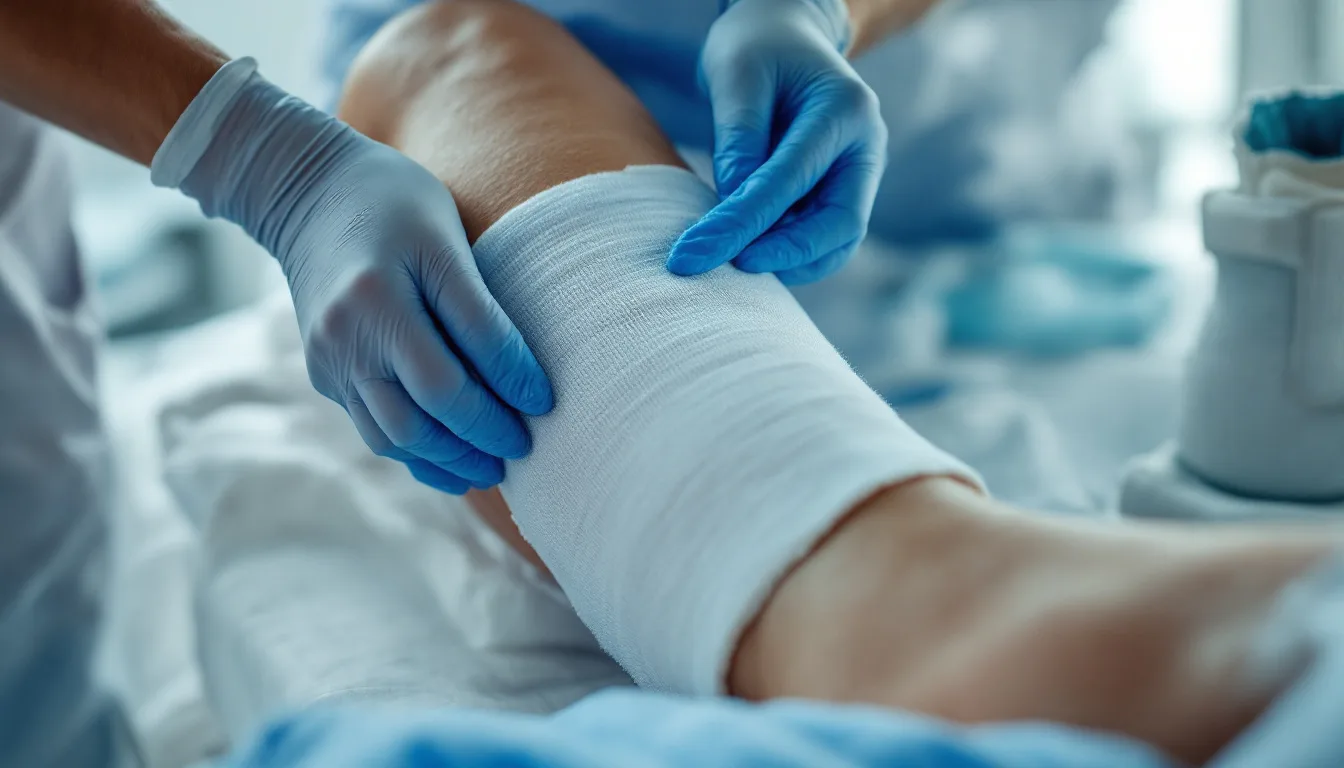
By the time a chronic wound reaches a quaternary referral center, it usually arrives with a file full of interventions: dressings that were changed, biologics that were tried, a graft that did not take. Increasingly, that file also includes hyperbaric oxygen therapy. The question clinicians at NYU Langone Health’s Kimmel Hyperbaric and Advanced Wound Healing Center set out to answer was simpler than the paperwork: why did any of it fail?
Their answer, published in the October 2026 issue of Advances in Skin & Wound Care, is not a dramatic discovery. It is an inventory of the obvious—and that is precisely what makes it uncomfortable reading for anyone who equates “advanced therapy” with “good wound care.”
The same failures, again and again
Reviewing wounds referred to their center after unsuccessful treatment, Dr. Lauren Draghi and Dr. Frank L. Ross catalogued the problems that kept surfacing. Inadequate compression therapy and lower-extremity elevation for venous disease. Ineffective offloading in diabetic foot ulcers. Thick layers of edema left unmanaged. Underlying vascular insufficiency never fully worked up. Topical agents that are outdated or lack evidence behind them. Debridement applied incorrectly—including the removal of stable eschar that was doing its job as a biological cover. And, threaded through nearly all of it, limited attention to whether the patient could actually adhere to the plan they had been given.
None of this is novel. The authors say so themselves, noting that these patterns “are neither novel nor unexpected” and that they “continue to recur despite well-established wound care principles and treatment guidelines.” That sentence is the story. A field with mature guidelines and a century of clinical experience still regularly rebuilds the same wounds from the wrong end.
The sequencing trap
The observation that should interest anyone tracking hyperbaric medicine is one the authors state almost in passing. Patients, they write, are frequently referred after undergoing advanced interventions—“including hyperbaric oxygen therapy and grafting procedures”—before the fundamentals of wound care have been optimized. In those cases, “suboptimal patient selection and sequencing of therapy, particularly in the presence of uncontrolled edema or inadequate offloading, may contribute to prolonged treatment without clinical benefit.”
In plain terms: HBOT is often deployed as an escalation when the wound was never given a fair chance at the basics. And a chamber cannot fix what it is standing on.
There is a physiological reason for that, and it is not subtle. Hyperbaric oxygen works by dissolving extra oxygen into plasma and pushing it into tissue along pressure gradients. If a limb is swollen, that extra distance between capillary and wound bed matters. If the foot is bearing weight, every session undoes part of the previous one. If the arterial supply has not been assessed, the oxygen has nowhere to go. HBOT is an adjunct—a multiplier on top of perfusion, offloading, compression, debridement, and infection control. Multipliers applied to zero still return zero.
What the evidence actually supports
It is worth being precise, because that is where the debate lives. The most recent Cochrane review of hyperbaric oxygen for chronic wounds (Kranke and colleagues, 2015) pooled 12 randomised trials with 577 participants. In diabetic foot ulcers, five trials with 205 participants found that HBOT increased the rate of ulcer healing at six weeks (risk ratio 2.35, 95% confidence interval 1.19 to 4.62)—but the benefit was not evident at one-year follow-up. Major amputation rates did not differ significantly (risk ratio 0.36, confidence interval 0.11 to 1.18, crossing the line of no effect). Only one 16-person trial examined venous ulcers. No trials addressed arterial or pressure ulcers at all. The reviewers’ own conclusion was that the trials had design flaws that left them “not confident in the results.”
In other words: a real but narrow signal in a selected group of diabetic foot ulcers, and essentially no leverage elsewhere—which is exactly why selection and preparation carry so much weight. The Food and Drug Administration’s cleared wound indications are similarly specific: certain non-healing diabetic wounds of the lower extremity, compromised skin grafts and flaps, crush injuries, and chronic refractory osteomyelitis, among others. Medicare’s national coverage determination for diabetic foot ulcers ties coverage to a documented period of failed standard therapy and requires that standard wound care continue alongside the chamber sessions, not be replaced by them. The regulatory architecture already assumes the basics come first.
The safety layer the marketing skips
Any honest account of HBOT has to carry the FDA’s August 2025 letter to health care providers, which is not about efficacy at all. The agency reminded providers that HBOT devices are Class II devices cleared through the 510(k) pathway under Product Code CBF, and that it is “aware of recent reports of fires that occurred with HBOT devices that resulted in serious injuries and deaths.” The letter’s recommendations—follow the manufacturer’s instructions, maintain fire prevention measures, train and monitor staff, observe prohibited items such as electrical or static-generating devices, dress patients in hyperbaric-compatible cotton clothing—describe a regulated medical environment, not a wellness amenity. The FDA has separately and repeatedly stated that the bulk of longevity, anti-aging, and general-wellness hyperbaric marketing does not correspond to any cleared indication.
What this means for the next referral
The NYU Langone paper is a single-center expert review, not a controlled trial. It reports no healing rates, no comparison group, no follow-up data. Its value is diagnostic rather than statistical: it names the failure modes that recur across a large referral practice.
Read alongside the Cochrane findings and the FDA’s cleared-indications list, it points to a practical order of operations. Before the chamber, someone should be able to say out loud that compression is in place, offloading is real and being used, edema is controlled, the vascular supply has been mapped, infection is treated, and the topical regimen has evidence behind it. If those boxes are empty, the honest first move is to fill them—not to add another therapy on top.
Hyperbaric oxygen is not the problem here. The problem is a healthcare habit of reaching for the most technically impressive intervention first. A wound that was never set up to heal will not be rescued by pressure, however precisely it is delivered.
Sources
- Draghi L, Ross FL. Managing Complex Wounds After Treatment Failure: Patterns Identified in an Advanced Wound Healing Center. Adv Skin Wound Care. 2026;39(9):457-461.
- PubMed — Managing Complex Wounds After Treatment Failure (PMID 42759044)
- Kranke P, Bennett MH, Martyn-St James M, et al. Hyperbaric oxygen therapy for chronic wounds. Cochrane Database Syst Rev. 2015;(6):CD004123.
- CMS — National Coverage Determination 20.29: Hyperbaric Oxygen Therapy
- FDA — Follow Instructions for Safe Use of Hyperbaric Oxygen Therapy Devices (Letter to Health Care Providers, August 25, 2025)
- UHMS — Approved Indications for Hyperbaric Oxygen Therapy