
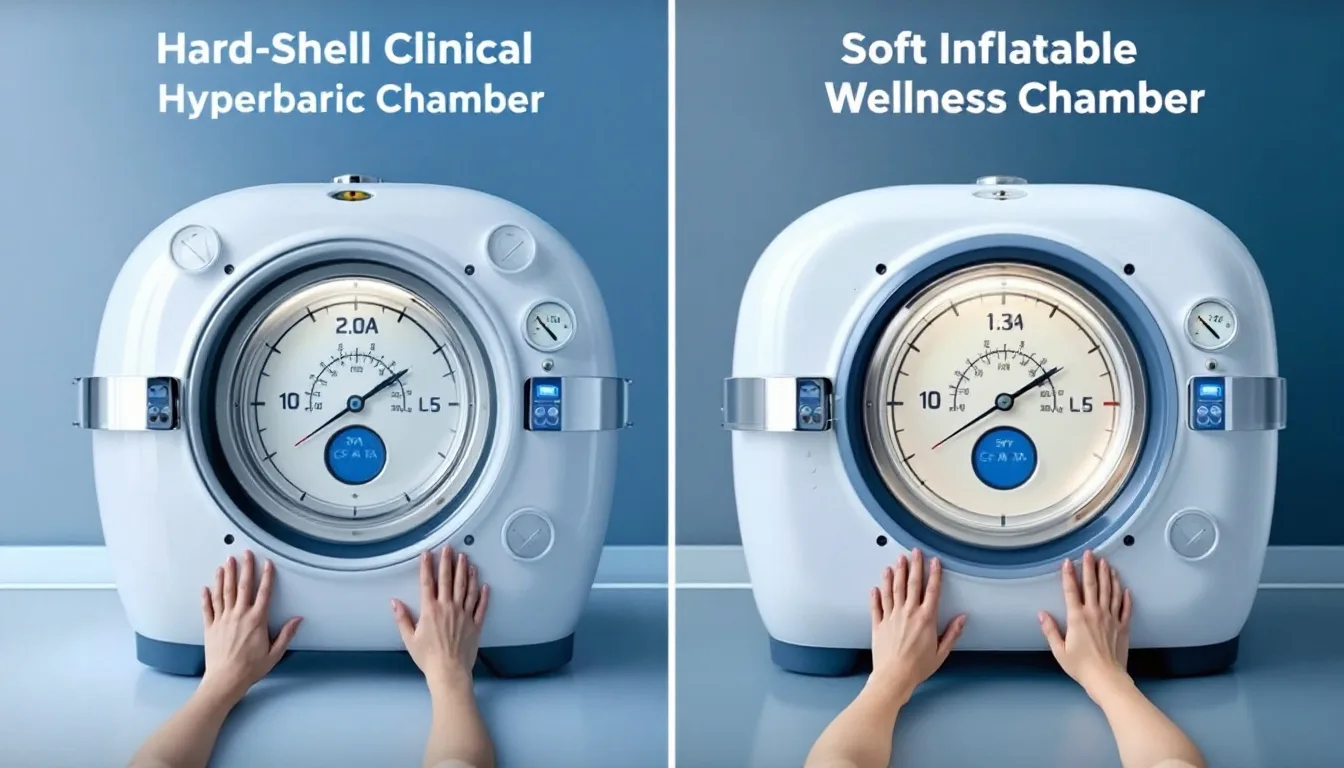
The wellness industry has a knack for borrowing medical terminology and diluting it for consumer appeal. “Hyperbaric oxygen therapy”—once a term reserved for hospital-based treatment of decompression sickness, carbon monoxide poisoning, and non-healing diabetic wounds—has been appropriated by spas, biohacking centers, and online retailers selling inflatable chambers for home use. But a new narrative review published in Medical Sciences in 2026 draws a sharp distinction that patients and consumers need to understand: clinical hyperbaric oxygen therapy (HBOT) and mild hyperbaric oxygen therapy (mHBOT) are not synonymous, and the differences go far beyond marketing language.
The Pressure Gap: Why ATA Matters
At the heart of the distinction lies atmospheric pressure, measured in atmospheres absolute (ATA). Clinical HBOT typically operates at pressures between 2.0 and 3.0 ATA—two to three times the pressure of sea-level atmosphere. At 2.0 ATA, a patient experiences the equivalent pressure of being approximately 33 feet underwater. This pressure is not arbitrary; it is calculated to achieve specific physiological effects that have been validated through decades of research and regulatory review.
Mild hyperbaric oxygen therapy, by contrast, generally operates at pressures between 1.3 and 1.5 ATA—only marginally above normal atmospheric pressure. The 2026 Medical Sciences review emphasizes that this difference is not merely quantitative but qualitative. At pressures below 1.4 ATA, the physiological effects that define hyperbaric oxygen therapy simply do not occur at therapeutically meaningful levels.
The Undersea and Hyperbaric Medical Society (UHMS), the leading professional body in the field, has taken a clear position on this threshold. According to their official position statement on low-pressure fabric chambers, exposure to treatment pressures less than 1.4 ATA while breathing air does not meet the definition of therapeutic hyperbaric oxygen therapy and does not achieve the minimum pressure and oxygen levels required for any UHMS-approved indication. All currently approved indications require that patients breathe near 100% oxygen while enclosed in a chamber pressurized to significantly higher levels.
Oxygen Delivery: The Missing Ingredient
Pressure alone does not define hyperbaric therapy. The “oxygen” component is equally critical, and here the divergence between clinical HBOT and mHBOT becomes even more pronounced. Clinical chambers deliver near 100% oxygen at pressure, creating a gradient that drives oxygen deep into tissues—dissolving directly into plasma at concentrations sufficient to sustain cellular metabolism even in areas where blood flow is compromised.
Mild hyperbaric chambers, particularly the soft inflatable models marketed for home use, typically pressurize with ambient air rather than pure oxygen. At 1.3 ATA breathing air, a person absorbs no more oxygen than they would breathing oxygen by mask at normal atmospheric pressure. The increased pressure does increase the partial pressure of oxygen in the air, but without supplemental oxygen delivery, the net physiological effect remains minimal.
The Medical Sciences review authors note that this distinction is frequently obscured by chamber sellers, practitioners, and even some researchers who use the terms interchangeably. The result is a marketplace where consumers may pay thousands of dollars for equipment or sessions that deliver a fundamentally different—and clinically unproven—intervention than the FDA-cleared therapy they believe they are receiving.
Regulatory Reality: What FDA Clears vs. What Wellness Sells
The FDA has cleared hyperbaric oxygen therapy devices for specific medical conditions: decompression sickness, carbon monoxide poisoning, delayed radiation tissue injury, certain non-healing diabetic wounds, gas gangrene, severe anemia, compromised skin grafts and flaps, crush injury, acute thermal burns, idiopathic sudden sensorineural hearing loss, and intracranial abscess. These clearances are based on rigorous evidence demonstrating safety and efficacy at defined pressure and oxygen parameters.
What the FDA has not cleared—what the agency explicitly warns against—is the use of hyperbaric devices for conditions like Alzheimer’s disease, autism, cancer, Lyme disease, multiple sclerosis, stroke, or general wellness and anti-aging. In a 2025 letter to healthcare providers, the FDA reiterated that HBOT devices should only be used under the care of a doctor and in facilities with appropriate hyperbaric accreditation. The letter also highlighted fire and explosion risks associated with improper use, particularly in home settings where safety protocols may be lacking.
The wellness industry’s response to this regulatory landscape has been to rebrand. By calling their services “mild hyperbaric oxygen therapy” or simply “hyperbaric therapy,” providers attempt to sidestep the evidentiary standards that apply to clinical HBOT while still trading on its medical credibility. The 2026 review makes clear that this linguistic maneuver does not change the underlying biology.
What the Evidence Actually Shows
The Medical Sciences review examined the biological effects of HBOT versus mHBOT across a range of proposed indications. The authors found that the pressure-dependent effects of clinical HBOT—including enhanced oxygen dissolution in plasma, reduced bubble size in gas embolism, modulation of inflammatory cytokines, and stimulation of angiogenesis—require pressures and oxygen concentrations that mHBOT does not achieve.
For some wellness applications, such as mild cognitive enhancement or athletic recovery, the evidence for clinical HBOT itself remains preliminary and mixed. The Cochrane Library, which conducts gold-standard systematic reviews, has found insufficient evidence to support HBOT for many off-label uses. When the underlying therapy’s efficacy is uncertain, a diluted version of that therapy cannot reasonably claim superior or even equivalent effects.
The review authors conclude that the conflation of HBOT and mHBOT serves commercial interests at the expense of scientific accuracy and patient safety. Consumers making healthcare decisions deserve clear information about what a treatment actually delivers, not what its marketing suggests.
Making Informed Choices
For patients considering hyperbaric oxygen therapy, the first question should be whether their condition is among the FDA-cleared indications. If so, treatment should be sought at accredited facilities with trained medical staff, proper safety protocols, and equipment capable of delivering the pressure and oxygen levels that evidence supports.
For those exploring hyperbaric therapy for wellness, longevity, or conditions not recognized by FDA, the decision becomes more complex. The 2026 review does not claim that mHBOT is harmful—though the FDA’s safety warnings about fire risk and barotrauma apply to any pressurized chamber—but it does establish that mHBOT is not simply a gentler version of the same therapy. It is a different intervention with different physiological effects and an evidence base that remains largely theoretical.
The wellness industry’s growth has brought genuine innovations in health optimization, but it has also blurred lines that matter. When a therapy’s name, equipment, and promised benefits are borrowed from medicine while its standards and evidence are not, consumers pay the price in dollars and potentially in delayed access to effective care. The distinction between HBOT and mHBOT is not pedantic—it is the difference between a regulated medical treatment and an unregulated wellness product, and that distinction deserves to be understood.