
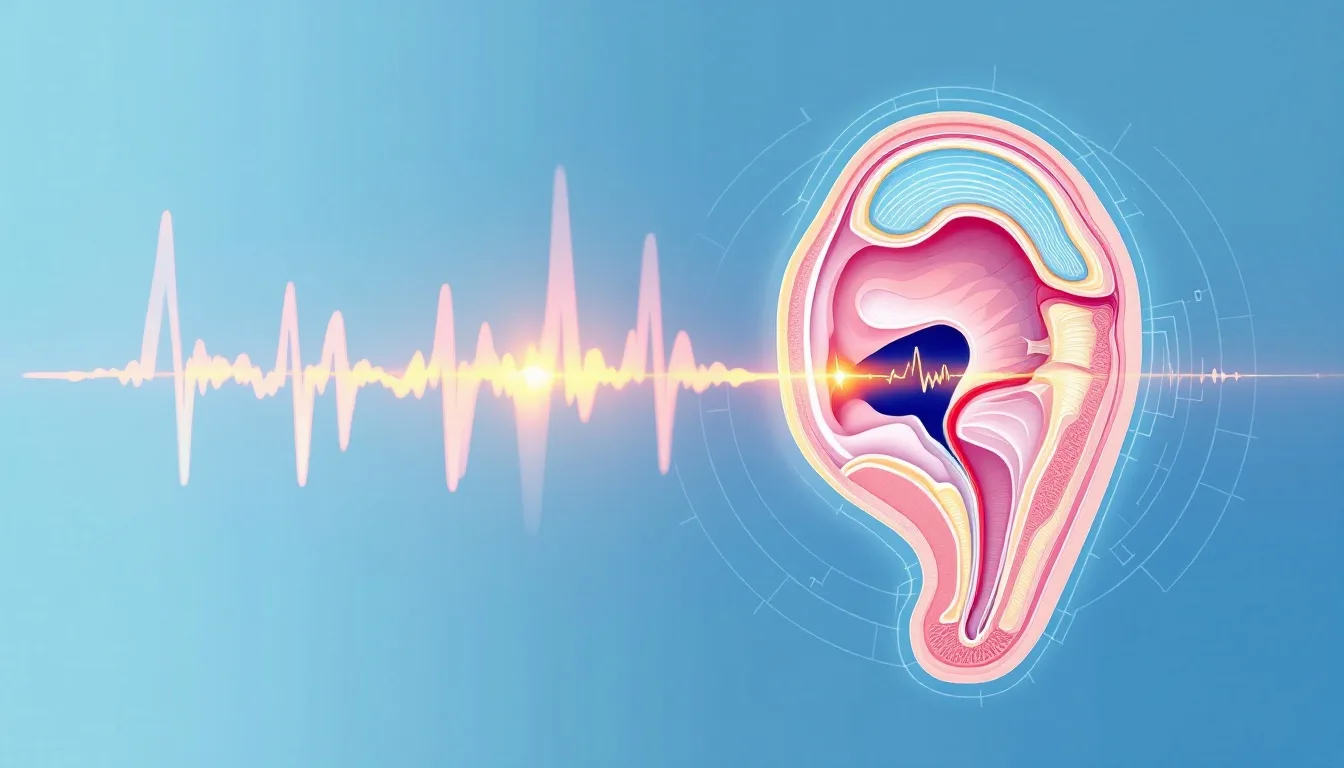
Imagine waking up one morning and discovering that one ear has gone silent. No pain, no warning—just a muffled world and the unsettling sensation of aural cotton stuffed where clarity used to live. For roughly one in five thousand people each year, this is not a hypothetical. It is idiopathic sudden sensorineural hearing loss (ISSNHL), an otologic emergency that demands action within days, not weeks.
The clock starts ticking the moment symptoms appear. Steroids—typically high-dose systemic corticosteroids—have long been the first-line treatment. But over the past two decades, hyperbaric oxygen therapy (HBOT) has carved out a distinct role, one recognized by the U.S. Food and Drug Administration as a legitimate intervention for this specific condition. Understanding when HBOT fits into the treatment cascade, and what the evidence actually says about its effectiveness, is essential for anyone facing this disorienting diagnosis.
The Anatomy of Sudden Silence
ISSNHL is defined as a rapid onset of hearing loss of at least 30 decibels across three contiguous frequencies, occurring over 72 hours or less. The “idiopathic” label is a placeholder for uncertainty: viral infections, vascular compromise, autoimmune reactions, and cochlear membrane breaks have all been proposed as culprits, but in most cases, no single cause is identified. What is known is that the cochlea, that spiral-shaped organ of hearing, is exquisitely sensitive to oxygen deprivation. The stria vascularis, which maintains the ionic gradients essential for hair cell function, is particularly vulnerable to ischemic insult.
The window for intervention is brutally narrow. Animal studies and retrospective human data suggest that the cochlear hair cells begin irreversible degeneration within days of oxygen starvation. By the two-week mark, the probability of meaningful recovery drops sharply. This urgency has driven the search for adjunctive therapies that can augment the anti-inflammatory effects of steroids and, crucially, restore oxygen delivery to the struggling inner ear.
Why HBOT Makes Physiological Sense
Hyperbaric oxygen therapy delivers 100 percent oxygen at pressures typically ranging from 2.0 to 2.5 atmospheres absolute (ATA). At these pressures, the amount of oxygen dissolved in plasma increases dramatically—enough to sustain cellular metabolism even without hemoglobin-bound oxygen. For the cochlea, which lacks collateral blood supply and depends entirely on the labyrinthine artery, this supersaturated oxygen can bypass compromised microcirculation and reach tissues that standard atmospheric breathing cannot adequately perfuse.
The mechanism is multifaceted. Beyond simple oxygen delivery, HBOT reduces cochlear edema, modulates inflammatory cytokines, and may promote angiogenesis in ischemic tissues. For ISSNHL, the goal is not merely to flood the system with oxygen but to create a favorable environment for hair cell survival and neural recovery during the critical early phase of injury.
The FDA Stamp: A Rare Neurological Clearance
The FDA’s list of cleared indications for HBOT is relatively short and heavily weighted toward wound healing, radiation injury, and diving emergencies. Idiopathic sudden sensorineural hearing loss stands out as one of the few neurological conditions on that list—a recognition that emerged from accumulating clinical evidence and the recognition that cochlear ischemia shares pathophysiological features with other ischemic injuries responsive to hyperbaric oxygen.
According to the FDA’s consumer guidance, HBOT is cleared for ISSNHL when administered within a specific timeframe after onset, typically in conjunction with corticosteroid therapy. This is not a wellness or longevity application; it is an acute intervention for a time-sensitive medical emergency. The distinction matters, especially as HBOT clinics increasingly market oxygen for everything from anti-aging to athletic recovery—uses that the FDA explicitly states are not cleared and for which evidence remains preliminary or speculative.
What the Evidence Shows: Promise with Nuance
A 2026 literature review published in the International Journal of Otorhinolaryngology and Head and Neck Surgery synthesized current treatment approaches for SSNHL, positioning HBOT as a valuable adjunct when initiated promptly. The review emphasized that while systemic steroids remain the cornerstone of treatment, the addition of hyperbaric oxygen appears to improve recovery rates, particularly for severe-to-profound hearing losses and cases where steroid response is incomplete.
The timing question has been addressed in several recent studies. A 2025 analysis in the American Journal of Otolaryngology compared outcomes among patients receiving systemic steroids alone versus those receiving concurrent HBOT, finding statistically significant improvements in pure-tone audiometry thresholds for the combination therapy group when treatment began within two weeks of symptom onset. Beyond that window, the incremental benefit of HBOT diminished, though some responders were observed up to four weeks post-onset.
Not all patients respond. Age, severity of initial hearing loss, presence of vertigo (which suggests more extensive cochlear or vestibular involvement), and time-to-treatment all influence prognosis. The evidence supports HBOT as a tool that improves the odds of recovery, not a guaranteed cure. This is the kind of measured, evidence-based framing that separates legitimate medical application from the hyperbolic claims sometimes attached to hyperbaric oxygen in wellness marketing.
Safety Considerations and the 2025 FDA Warning
In April 2025, the FDA issued a letter to health care providers reminding them of safety protocols for HBOT devices. The communication highlighted fire risks, the importance of following manufacturer instructions, and concerns about unregulated home-use chambers marketed for off-label indications. For ISSNHL treatment, which requires hospital-grade or clinic-based multiplace or monoplace chambers operating at therapeutic pressures, these warnings reinforce the importance of receiving care at accredited facilities with trained hyperbaric medicine specialists.
Barotrauma to the middle ear is the most common side effect of HBOT, occurring when pressure equalization fails during descent. Oxygen toxicity seizures, while rare, can occur with prolonged exposure at higher pressures. These risks are manageable in clinical settings but underscore why HBOT for ISSNHL should not be attempted with soft-sided home chambers or improvised setups—the pressures and oxygen concentrations required for therapeutic effect exceed what consumer devices can safely deliver.
The Treatment Protocol: What Patients Can Expect
For ISSNHL, HBOT is typically administered as a series of 10 to 20 sessions, with patients breathing 100 percent oxygen at 2.0 to 2.5 ATA for 60 to 90 minutes per session. Treatment is usually scheduled once or twice daily, five days per week. The Undersea and Hyperbaric Medical Society (UHMS) includes ISSNHL in its list of approved indications, supporting insurance coverage for appropriately selected patients, though prior authorization is often required.
The ideal candidate presents within 14 days of symptom onset, has failed to show significant improvement after 48 to 72 hours of high-dose steroids, or has severe-to-profound hearing loss at presentation. Some protocols initiate HBOT concurrently with steroids from day one, particularly for patients with poor prognostic factors. Intratympanic steroid injections—direct delivery of medication through the eardrum—may also be combined with HBOT in salvage scenarios where initial systemic treatment has failed.
Navigating Access and Insurance
Despite FDA clearance and UHMS endorsement, access to HBOT for ISSNHL remains uneven. Not all hospitals have hyperbaric facilities, and not all insurers cover the treatment without extensive documentation. Patients facing sudden hearing loss should seek care at centers with both otolaryngology and hyperbaric medicine capabilities, where multidisciplinary teams can coordinate steroid therapy, audiological monitoring, and HBOT scheduling without the delays that can compromise outcomes.
For those in regions without convenient HBOT access, the urgency of treatment creates a difficult calculus. Travel to a distant facility may be warranted given the time-sensitive nature of ISSNHL, but the logistical challenges—particularly when vertigo or significant hearing impairment complicates transportation—can be substantial. Telemedicine consultations with hyperbaric specialists can help determine whether the potential benefits justify the logistical burden in individual cases.
The Bottom Line
Idiopathic sudden sensorineural hearing loss is a medical emergency where hours and days matter. Hyperbaric oxygen therapy, when administered promptly and appropriately, offers a meaningful adjunct to corticosteroid treatment—a rare instance where HBOT holds specific FDA clearance for a neurological condition. The evidence supports its use, particularly within the first two weeks of symptom onset and for severe cases, while also acknowledging that not all patients will recover hearing regardless of intervention.
As with all HBOT applications, the line between established medical use and speculative wellness marketing should be kept clear. Sudden hearing loss is not a condition for home chambers or experimental protocols. It requires urgent evaluation by specialists, rapid initiation of evidence-based treatment, and, for many patients, referral to accredited hyperbaric facilities. In the race against cochlear ischemia, HBOT is a legitimate tool—one that, used correctly, can mean the difference between permanent silence and the return of sound.
Sources
- FDA — Hyperbaric Oxygen Therapy: Get the Facts
- FDA — Follow Instructions for Safe Use of HBOT Devices (2025 Letter to Health Care Providers)
- Mendonca EC — Sudden sensorineural hearing loss treatment options: a short literature review. Int J Otorhinolaryngol Head Neck Surg. 2026
- American Journal of Otolaryngology — HBOT as Concurrent Treatment with Systemic Steroids for ISSNHL (2025)
- UHMS — Approved Indications for Hyperbaric Oxygen Therapy