
The boy was three when a lawnmower took part of his left distal femur: a Gustilo type III-B open fracture with transphyseal separation, a missing piece of the lateral condyle and a soft-tissue defect that needed serial vacuum-assisted dressings and a skin graft. Three years later he reached Nationwide Children’s Hospital in Columbus, Ohio, with a right leg three centimetres longer than the left, a valgus deformity of the left knee and a growth plate that had partly closed.
By the time he turned ten he had been through two femoral lengthenings with a magnetically driven nail, 8.8 centimetres of new bone and somewhere between eighty and eighty-two sessions inside a monoplace chamber breathing 100% oxygen at two atmospheres.
That last figure is why his case is in the literature. Writing in Cureus in September, Anirejuoritse Bafor, Bicheng Yong and Christopher Iobst describe what they believe is the first clinical report of adjunctive hyperbaric oxygen therapy used alongside an internal lengthening nail in a child. They are also unusually disciplined about what it does and does not mean. The aim, they write, is not to demonstrate efficacy but to document the clinical and radiographic course, show that the treatment was feasible and tolerated in a child after major trauma, and offer “hypothesis-generating observations.”
Two numbers that do the work
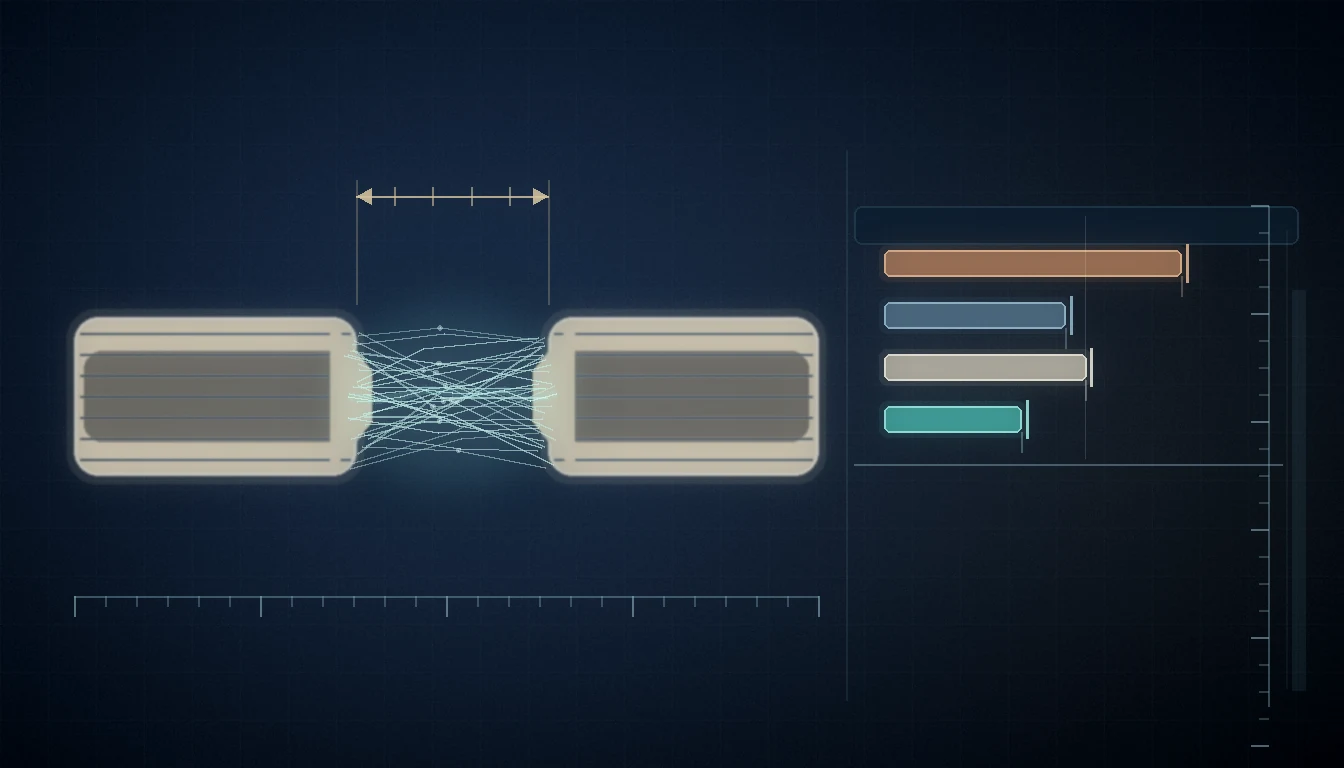
Surgeons who lengthen bones track two things. The bone healing index divides the days to consolidation by the centimetres gained, so a lower figure means faster new bone per unit of length. The pixel value ratio compares the density of the regenerate on plain radiographs with the adjacent normal bone; a ratio climbing towards 1.0 is the radiographic stand-in for mineralisation, and roughly 0.85 has become the usual trigger for letting a patient weight-bear.
The first lengthening came at age six. The femoral canal was too small for an intramedullary device, so the nail was used extramedullary, off-label, after shared decision-making with the family — the second off-label decision in this child’s care, alongside the oxygen. After a seven-day latency, distraction began at 0.75 mm a day, rose to 1.0, was pushed briefly to 1.2 when the regenerate looked vigorous, and was pulled back to 1.0 because of discomfort. The femur gained 4.0 cm. The pixel ratio went from 0.85 at two weeks to 0.97 by eight and a half. Full weight-bearing came at 15.5 weeks, the nail out at 21, and the healing index was 27.25 days per centimetre.
The second came at ten, when the canal could take a retrograde intramedullary nail and a modified reverse planning method could correct the valgus and the length discrepancy in one operation. Distraction ran at 0.8 then 0.9 mm a day and produced 4.8 cm in about seven weeks. The ratio was 0.82 at the end of distraction and 1.0 by twelve weeks, weight-bearing followed at twelve weeks, and the healing index was 18.54 days per centimetre.
The chamber was a Class B monoplace unit, 2.0 ATA, about 75 minutes a session, under technologist supervision. The paper’s case narrative counts 45 sessions in the first course and 35 in the second; its abstract says 46 and 36. Nobody reconciles the difference, which is the sort of small seam that shows a manuscript was assembled by three people in a hurry.
The benchmark you choose decides the answer
The authors compare their indices with a Sheffield series of 50 children aged 11 to 17, where femoral lengthening with an external fixator yielded 53.2 ± 19 days per centimetre and with a magnetic nail 40.2 ± 14. On that yardstick the boy healed 32% faster than the nail group the first time and 54% faster the second, with his knee motion intact and no regenerate fracture, non-union or stiffness.
There is a newer yardstick, and it is less generous. In 2025 Reif and colleagues at Hospital for Special Surgery published 286 magnetic-nail lengthenings and reported healing indices of 24.5 ± 9.5 days per centimetre for the antegrade femur, 33.5 ± 14.5 for the retrograde femur and 41.0 ± 17.4 for the antegrade tibia. Set against the antegrade femur, 27.25 days per centimetre is 0.29 standard deviations above the mean — about as unremarkable as a measurement gets. Set against the retrograde femur, which is the correct comparator for the second operation, 18.54 sits a little over one standard deviation below.
Both comparisons are honest. The child’s numbers are good, more clearly good the second time, and how large the achievement looks depends almost entirely on which cohort is placed beside him. That is not a debunking. It is how a single case behaves when you take its arithmetic seriously.
There is a second arithmetic trap. Multiplying the index by the length gained returns the absolute days behind each ratio: about 109 for the first course and about 89 for the second, figures that line up with the reported weight-bearing points of 15.5 and 12 weeks. So the second regenerate did reach full weight-bearing roughly twenty days sooner. It was also 20% longer, and the index divides by that length — which means something like a third of the apparent 32% improvement is division rather than biology.
Why the authors refuse to claim a result
“We, however, cannot infer causality from a single case,” they write, and then say it several more ways. The favourable course, in their account, “likely reflects the influence of multiple factors, including young age, absence of significant comorbidities, meticulous planning, and structured rehabilitation.” They point out that any comparison between the two courses is confounded by technique, extramedullary versus intramedullary, and by four years of growth. They also concede a gap that will annoy anyone hoping for a clean story: pain was never measured. No standard scores, no patient-reported assessments, no analgesic records. Whatever hyperbaric oxygen did or did not do for the part of limb lengthening that families feel most acutely remains entirely unknown.
The most concrete clinical lesson in the report is a caution rather than a triumph. Distraction was accelerated to 1.2 mm a day because the bone was forming so readily. The boy developed discomfort. The surgeons backed off. Their gloss: enthusiasm for bone healing should not outpace soft tissue tolerance. In a therapy marketed on speed, that is worth pinning to the wall.
Strong in rabbits, thin in children
The biology is not frivolous. Distraction osteogenesis is a hypoxia-driven repair: the regenerate mineralises along an advancing vascular front, and osteogenesis is coupled to angiogenesis through HIF-1α and a web of mechanotransduction pathways, as Hu and colleagues set out in a 2024 review in FASEB Journal. Oxygen tension is exactly what the gap is short of, and reviews of hyperbaric oxygen in bone disease describe enhanced osteoblast activity, angiogenesis and modulation of the inflammatory and redox environment.
The animal literature is the strongest part of the case. A 2026 systematic review by Weinrich and colleagues pooled 37 studies and 2,141 animals and found that “bone distraction osteogenesis showed the most consistent HBOT effects in biomechanical outcomes” — a firmer signal than they found for muscle, tendon or cartilage. It also found high or unclear risk of bias almost everywhere, protocols ranging from 1 to 56 sessions, and no reported harm to the tissues studied.
In humans, distraction osteogenesis has almost no hyperbaric evidence at all. A 2026 systematic review by Albishi and colleagues searched for adjuncts in long-bone lengthening and found nine studies covering 304 participants across low-intensity ultrasound, platelet-rich plasma, bone marrow aspirate concentrate and cells. Its verdict on oxygen was blunt: hyperbaric therapy “lacked sufficient high-quality evidence to support routine use.” Nor could it recommend the other adjuncts routinely.
Cochrane said something similar a long time ago. Bennett, Stanford and Turner’s review of hyperbaric oxygen for fracture healing and non-union updated its searches to July 2012 and reported that no trial met the inclusion criteria: the review “failed to locate any relevant clinical evidence to support or refute” the treatment. Three randomised trials were listed as under way at the time. The Cureus authors cite the 2005 edition of that review, which the 2012 update superseded — a footnote-level slip, but it points at a larger fact: the trial pipeline that seemed to be filling has not visibly delivered.
What it takes to put a six-year-old in a chamber
Paediatric hyperbaric treatment is not fringe, and the safety record in dedicated centres is decent. Aydin reported 329 patients under 18 and 3,164 exposures across two Turkish centres over fifteen years: 77.2% completed treatment as planned, five treatments were complicated by middle-ear barotrauma, and no central nervous system oxygen toxicity was recorded. A Europe-wide survey by Janisch and colleagues found that 90% of responding centres treat children on adult protocols, with side effects reported as 6.8% anxiety, 2.4% barotrauma, 0.9% seizure and 0.2% retinopathy, and no pulmonary barotrauma or oxygen toxicity.
Anxiety is the number that scales with this case. Eighty sessions of seventy-five minutes each, for a child of six, in a sealed steel cylinder.
The authors name the practical barrier themselves. Hyperbaric oxygen needs specialised facilities, trained staff and repeated 60- to 90-minute sessions over weeks, and it can be expensive. Insurance coverage is typically restricted to a short list of approved indications, and adjunctive use during limb lengthening may simply not be reimbursed. That, they suggest, is why the therapy stays rare in lengthening protocols “even when biologically plausible” — and it is why this family had to self-refer and pay rather than be prescribed.
Where the regulators stand
Almost none of this is cleared. Hyperbaric oxygen devices are Class II devices cleared through the 510(k) pathway under product code CBF, and the FDA’s August 2025 letter to health care providers is about fire, not indications: the agency describes reports of fires in hyperbaric devices that caused serious injuries and deaths, states that the root cause is not known, and asks clinicians to follow the instructions for use, prevent ignition sources, train staff, monitor patients for the whole session, keep to cleaning and maintenance intervals, exclude prohibited electrical and static-producing items, and dress patients in 100% cotton. Limb lengthening and bone regeneration appear nowhere in that clearance framework.
The Undersea and Hyperbaric Medical Society’s fifteenth edition lists fifteen numbered indications. The bone entries are refractory osteomyelitis, delayed radiation injury including bony necrosis, and avascular necrosis. Limb lengthening, distraction osteogenesis and fracture non-union are absent. Medicare’s national coverage determination 20.29 limits chamber-based therapy to fifteen named conditions — chronic refractory osteomyelitis among them, with osteoradionecrosis and soft-tissue radionecrosis as adjuncts — and requires documented failure of standard therapy before wounds qualify. Limb lengthening is not on the list.
A case report is not evidence of efficacy, and the authors say so in nearly those words. What they have shown is narrower and still worth having: that eighty sessions at 2.0 ATA were tolerated by a six-year-old through two operations and a nail removal, that the regenerate mineralised without fracture or non-union, and that somebody thought to write down the numbers precisely enough for other people to argue with. The next useful contribution will not be another case report.
Sources
- Bafor A, Yong B, Iobst C. Adjunctive Hyperbaric Oxygen Therapy During Femoral Limb Lengthening in a Child: A Case Report. Cureus. 2026;18(9):e117129.
- Reif TJ, Khabyeh-Hasbani N, Buksbaum J, Sheridan GA, Hoellwarth JS, Fragomen AT, Rozbruch SR. Bone Healing Index and Complications of a Magnetic Internal Lengthening Nail: A Retrospective Series of 286 Bone Lengthening Events. JAAOS Glob Res Rev. 2025;9(6):e25.00118.
- Hafez M, Nicolaou N, Offiah A, Giles SN, Madan SS, Fernandes JA. Femoral Lengthening in Children — A Comparison Between Magnetic Intramedullary Lengthening Nails and External Fixators. J Pediatr Orthop. 2022;42(3):e290-e294.
- Elsheikh AA, Wright J, Stoddart MT, Goodier D, Calder P. Use of the Pixel Value Ratio Following Intramedullary Limb Lengthening: Uncomplicated Full Weight-bearing at Lower Threshold Values. Strategies Trauma Limb Reconstr. 2022;17(1):14-18.
- Albishi W, Aldosari OA, Alduraibi A, AlNahari AS, Alturki AI, Aldraihem OO, Alshayhan F. Adjunctive Therapies in Long-Bone Distraction Osteogenesis: Clinical Evidence for Biophysical and Biologic Treatment Strategies. J Clin Med. 2026;15(12):4417.
- Weinrich L, Tischer T, Schlesiger L, Pachowsky ML, Hoos L. Effects of hyperbaric oxygen therapy on bone, muscle, cartilage, tendon and ligaments in animal studies: a systematic review. BMC Musculoskelet Disord. 2026;27(1):731.
- Weinrich L, Tischer T, Schlesiger L, Pachowsky ML, Hoos L. Effects of hyperbaric oxygen therapy on human musculoskeletal pathologies in clinical studies: a systematic review. BMC Musculoskelet Disord. 2026;27(1):661.
- Bennett MH, Stanford RE, Turner R. Hyperbaric oxygen therapy for promoting fracture healing and treating fracture non-union. Cochrane Database Syst Rev. 2012;11(11):CD004712.
- Hu W, Guo Z, Tang W, Long J. Mechanoresponsive regulation of tissue regeneration during distraction osteogenesis. FASEB J. 2024;38(18):e70056.
- Feng J, Zhu C, Zou J, Zhang L. Hyperbaric Oxygen Therapy for the Treatment of Bone-Related Diseases. Int J Mol Sci. 2025;26(3):1067.
- Aydin F. Hyperbaric oxygen treatment in children: experience in 329 patients. Diving Hyperb Med. 2023;53(3):203-209.
- Janisch T, Stollenwerk A, Siekmann UP, Kopp R. Treatment of children with hyperbaric oxygenation (HBOT): a Europe-wide survey. Minerva Pediatr (Torino). 2022;74(2):116-120.
- FDA. Follow Instructions for Safe Use of Hyperbaric Oxygen Therapy Devices — Letter to Health Care Providers (August 25, 2025).
- Undersea and Hyperbaric Medical Society. Hyperbaric Oxygen Therapy Indications, 15th Edition.
- CMS. National Coverage Determination 20.29: Hyperbaric Oxygen Therapy.