
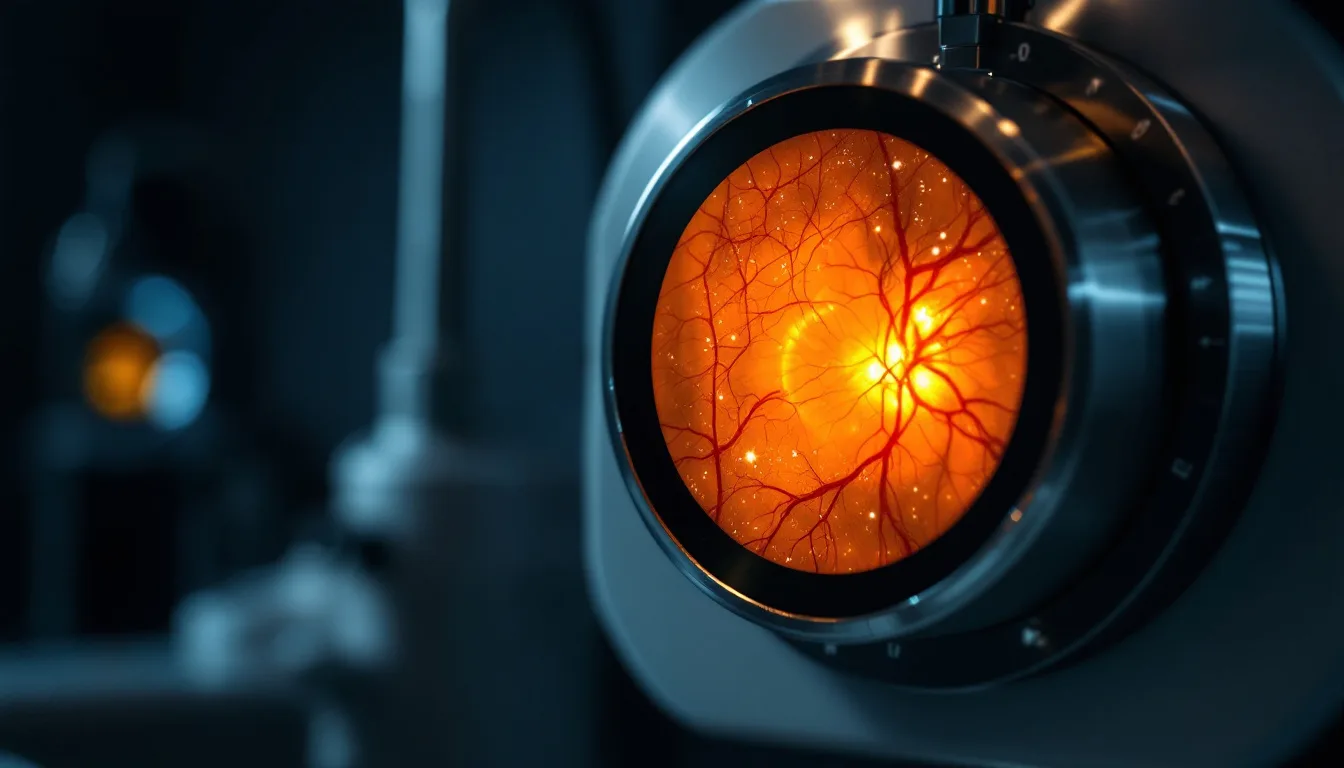
The chamber does not know what is inside it. A man with a Wagner grade III plantar ulcer lies in a monoplace shell at 2.4 atmospheres absolute for ninety minutes, breathing close to 100 percent oxygen, and every tissue in his body is along for the session — including the retina, one of the most metabolically demanding tissues he owns, and the one tissue where the direction of hyperoxia’s effect has been argued over for thirty years.
Medicare pays for that session, because diabetic wounds of the lower extremity sit inside the national coverage determination that governs hyperbaric oxygen therapy in the United States. What the payer does not ask, and what the treatment order does not require, is whether the patient’s retinas were graded before the first pressurisation.
The arithmetic behind that omission is not obscure. A 2021 review of 59 population-based studies put the global prevalence of diabetic retinopathy at 22.27 percent of people with diabetes and vision-threatening retinopathy at 6.17 percent, and counted 103.12 million adults living with it in 2020, projected to reach 160.50 million by 2045. Roughly one in five has retinopathy. Roughly one in sixteen has the form that threatens sight.
Fifteen entries, one of them an eye, none of them the retina
The Undersea and Hyperbaric Medical Society’s fifteenth edition of accepted indications runs to seventeen numbered entries covering fifteen conditions. Exactly one of them concerns the eye: 06a, central retinal artery occlusion, an emergency in which a clot has stopped perfusion and the tissue is dying within hours. The string “retinopathy” does not appear anywhere on that page.
The American coverage rule is blunter. NCD 20.29, effective 3 April 2017 and still operative, limits reimbursement to a closed list of fifteen conditions. Diabetic lower-extremity wounds qualify only on three criteria together: diabetes, a wound of Wagner grade III or higher, and failure of an adequate course of standard wound therapy. On that document the words “eye”, “retina”, “retinopathy” and “ophthalmic” do not occur at all.
So the situation is not that hyperbaric oxygen was judged against diabetic retinopathy and found wanting. It is that the two have never been formally introduced. The chamber’s most common chronic application is populated almost entirely by patients whose most oxygen-sensitive tissue is absent from both the indication list and the billing rule that follows it. The evidence that does exist on retinopathy arrives, in the words of the newest review of the question, from people who “received HBOT for diabetic foot ulcers rather than as a primary retinal treatment.”
What the new review actually corrects
That review, published on 19 November in Cureus by Arham Yahya Rizwan Khan of Shifa Tameer-e-Millat University in Islamabad and Muhammad Bilal Malik of the University of Calgary’s ophthalmology department, is a structured narrative review, not a systematic one, and it says so. Its contribution is not new data. It is a refusal — a refusal to let mechanisms be borrowed across tissues, which is how most of the favourable claims in this space have been assembled.
The heart of it is an argument the field has been avoiding. In a chronic wound, hyperbaric oxygen is supposed to help precisely because it drives angiogenesis — oxygen-dependent collagen maturation, growth-factor signalling, endothelial progenitor recruitment, transient reactive oxygen species acting as signals. In a diabetic retina, angiogenesis is the disease. Proliferative retinopathy is pathological neovascularisation driven substantially by hypoxia-inducible factor 1-alpha and vascular endothelial growth factor, and the theoretical appeal of hyperoxia in that eye is that it would do the opposite: raise oxygen availability, destabilise HIF-1alpha, and quiet the VEGF signal making fragile new vessels bleed.
Both stories are told about the same intervention. The review’s line is that neither may be used as a defence of the other. “It is inaccurate to state that VEGF is unaffected by oxygen tension or that HBOT necessarily increases HIF-1alpha in the retina,” the authors write, noting that direct human evidence on vitreous VEGF in diabetic retinopathy is simply missing. They are equally dismissive of the older phrase “retinal oxygen poisoning”, which comes largely from neonatal models where the retinal vasculature is still developing, not from adult retinas.
The animal study that keeps getting cited
The most direct laboratory evidence for a retinal effect is now twenty years old. Chang and colleagues, publishing in Clinical and Experimental Ophthalmology in 2006, took streptozotocin-diabetic rats to 2.5 atmospheres on 100 percent oxygen for ninety minutes, three times a week, for three months, and measured how much Evans blue dye leaked out of retinal vessels. Non-diabetic controls leaked 7.6 microlitres of plasma per gram of retinal dry weight per hour, untreated diabetic animals 18.5, and treated animals 10.2, with eight rats per group and differences significant below 0.05. A real biological signal, and a permeability measurement with no acuity, no retinopathy grading and no humans in it. It is cited because it is the closest thing to a mechanism anyone has.
The evidence ladder, ordered by how much weight it can bear
The one trial in this literature that can carry weight is not, strictly, a retinopathy trial. Sellman and colleagues at Lund, publishing in Undersea and Hyperbaric Medicine in 2020, ran a randomised, single-centre, double-blind, placebo-controlled study in 50 patients with diabetes and chronic foot ulcers, the population that actually walks into chambers, with ophthalmological examinations before treatment and at three, six, twelve and twenty-four months. Median age 67.
Over two years, visual acuity was similar between groups and did not change. No differences in retinopathy appeared, nor in the number or area of haemorrhages, hard exudates, microaneurysms or oedemas. New clinically significant macular oedema was found in four eyes in the oxygen group and three in the placebo group. The authors’ own verdict is carefully flat: “In this population of diabetic foot ulcer patients HBO2 seems to be neutral in an ophthalmological perspective.”
Then the observational work, which is where the optimism lives. Kaldırım and colleagues in Cutaneous and Ocular Toxicology in 2019 followed 60 eyes of 30 patients through 30 sessions given for a foot ulcer. All 30 had retinopathy, which is why they could be sorted into three stages, from mild-to-moderate non-proliferative to laser-treated inactive proliferative disease. At the end, “there was no progression or regression in the stage of DRP in any group.” What moved was anatomy: the choroid thinned over time in all three groups, and the macula thickened regionally in mild-to-moderate eyes. Gün’s group found no consistent acute change in 49 eyes measured before and 45 minutes after a single session.
Maalej’s group in Tunis compared 25 patients with non-proliferative retinopathy given 30 sessions at 2.5 atmospheres for foot ulcers against 25 untreated patients with retinopathy, and reported regression or stabilisation of lesions and a fall in central macular thickness: non-randomised, short follow-up, no masking.
The quantitative summary everyone quotes is a 2025 systematic review and meta-analysis in Diabetology by Moccia and colleagues: five studies, 463 eyes. Pooled best-corrected visual acuity improved by 0.05 logMAR (95 percent CI -0.09 to -0.01) with no statistical heterogeneity, and central macular thickness fell by 75.21 micrometres (95 percent CI -90.04 to -60.38). Both look impressive until you read the authors’ own sensitivity analysis. “This effect was fragile, losing significance when the largest study was excluded,” they write of the acuity result, and the thickness estimate carried an I-squared of 62 percent. The Cureus review’s summary of the whole ladder is the fairest sentence in the literature: these findings “are best interpreted as an efficacy signal that justifies better trials, not as evidence sufficient for routine clinical adoption.”
Seventeen sessions in Hobart
Set against all of that is a 2017 one-page letter no meta-analysis can digest.
Viet Tran and David Smart, then at the Royal Hobart Hospital’s hyperbaric unit in Tasmania, described a 43-year-old man with type 2 diabetes on insulin for 28 years, an HbA1c of 7.9 percent and bilateral plantar ulcers refractory to specialised wound care, booked for 40 sessions at 243 kilopascals for 90 minutes. His ophthalmic history was not innocent: bilateral proliferative retinopathy three years earlier treated with pan-retinal photocoagulation, and cataract surgery on the right eye a year before and the left three months before. One week before session one, fundoscopy confirmed non-proliferative disease with no proliferation.
After his fifth session, fundoscopy found a pre-retinal haemorrhage in the left eye — proliferative disease. It was lasered. His acuity, 6/9 in both eyes, had not changed and he reported no visual field loss. Three weeks later, after twelve more sessions, proliferative changes had appeared in both eyes. He received intravitreal bevacizumab and fill-in laser, his vision remained unchanged, and hyperbaric treatment was stopped to let the proliferative phase settle.
Tran and Smart are scrupulous about the confound. “Whether this patient’s sudden progression to PDR was related to HBOT, recent cataract surgery or another unknown factor is unclear.” Non-proliferative retinopathy progresses in up to a third of patients after cataract surgery, though published follow-up has not shown progression to proliferative disease at twelve months. What they cannot explain away is the timing, which they call “more rapid than available data regarding vascular regrowth in wound healing would suggest.”
Their response was institutional, and it is the most practically useful sentence in this literature: “Thereafter, routine screening and treatment of all diabetic patients for PDR was adopted at our facility. Until now, there have been no further cases of NPDR evolving into PDR at three-month review following HBOT.” One unit, one case, and a rule.
The letter traces the worry back to a 1994 report in Eye of vitreous haemorrhage after hyperbaric oxygen, made without baseline fundoscopy, and forward to the only double-blind evidence that predated Sellman: a 2001 conference abstract of 15 diabetic patients in which neither arm showed neovascularisation or worsening at three months. It was never published as a full paper. For sixteen years it was the safety data.
What the regulators do and do not say
None of this makes diabetic retinopathy an approved use, and the review is emphatic: “HBOT therefore remains investigational for DR,” and the evidence “does not support replacing anti-VEGF therapy, laser photocoagulation, corticosteroid therapy when indicated, or vitreoretinal surgery.” The reviewers note that the treatment appears in neither the 2026 American Diabetes Association standards nor the 2025 American Academy of Ophthalmology preferred practice pattern. Any clinic selling sessions for retinopathy or macular oedema is outside every guideline.
The device layer is separate and applies regardless of indication. In its letter of 25 August 2025 the FDA reminded providers that hyperbaric devices are Class II, cleared through the 510(k) pathway under product code CBF, and that it is “aware of recent reports of fires that occurred with HBOT devices that resulted in serious injuries and deaths”, adding that “the root cause of these events is not known”. The recommendations concern grounding, staff training, supervision throughout treatment, and compliance with NFPA-99-2024 and ASME PVHO-1-2023. Nothing in that letter addresses the eye, and it should not be read as doing so: it is a fire-and-safety document, not an indications document.
Side effects are real but modest: a 2023 meta-analysis of randomised trials in Frontiers in Medicine found adverse events more frequent with hyperbaric oxygen than control, ear discomfort the commonest, and higher rates above 2.0 atmospheres and beyond ten sessions. Heyboer’s review of quantified side effects lists a reversible myopic shift among the ocular effects of a course, a reminder that the eye is not a passive bystander to a pressure protocol.
The gap is a handoff, not a controversy
Read the documents together and the shape of the problem changes. This is not a dispute about whether hyperbaric oxygen helps diabetic retinopathy; on that, nobody has run the trial that would decide it, and the review says so: “No adequately powered randomized trial has compared an HBOT strategy with contemporary stage-matched standard retinal care as a primary ophthalmic intervention.”
The live problem is smaller and more administrative. A wound clinic orders the chamber; an ophthalmologist or diabetologist does the annual retinal screening, months earlier or later. Nobody owns the week before session one. The reviewers’ recommendation is revealing in its modesty: “careful ophthalmic assessment in research protocols, particularly for eyes with active PDR or untreated sight-threatening disease.” In research protocols. One Australian unit made it a clinical rule and has not published another such case since.
Which leaves two defensible claims. First, the largest double-blind test of the question found the chamber ophthalmologically neutral over two years in exactly the patients who receive it; anything stronger is being read into open-label studies. Second, a man whose retinopathy had been graded quiet a week earlier developed bilateral proliferative disease across seventeen sessions, and the unit that treated him changed its intake. The trial says the risk is too small to see in fifty patients. The letter says it was large enough to see in one.
What would separate those two readings is not more mechanism papers. It is a properly powered retinal trial with stage-specific endpoints — or, far cheaper, a fundus photograph in the chart before the hatch closes.
Sources
- Hyperbaric Oxygen Therapy in Diabetic Retinopathy: Mechanistic Rationale, Clinical Evidence, and Safety Considerations (Cureus, 19 November 2026)
- Efficacy of Hyperbaric Oxygen Therapy in Diabetic Retinopathy and Macular Edema: A Systematic Review and Meta-Analysis (Diabetology, 2025)
- Long-term effects of hyperbaric oxygen therapy on visual acuity and retinopathy (Undersea and Hyperbaric Medicine, 2020)
- The effect of hyperbaric oxygen therapy on retinal thickness and progression of retinopathy in patients with Type 2 diabetes: a prospective cohort study (Cutaneous and Ocular Toxicology, 2019)
- Acute effect of hyperbaric oxygen therapy on macular and choroidal thickness in patients with type 2 diabetes and diabetic foot ulcers (Photodiagnosis and Photodynamic Therapy, 2022)
- The effects of hyperbaric oxygen therapy on diabetic retinopathy: a preliminary study (Journal francais d'ophtalmologie, 2020)
- Proliferative retinopathy during hyperbaric oxygen treatment (Diving and Hyperbaric Medicine, 2017)
- Hyperbaric oxygen therapy ameliorates the blood-retinal barrier breakdown in diabetic retinopathy (Clinical and Experimental Ophthalmology, 2006)
- Global Prevalence of Diabetic Retinopathy and Projection of Burden through 2045 (Ophthalmology, 2021)
- Hyperbaric Oxygen Therapy: Side Effects Defined and Quantified (Advances in Wound Care, 2017)
- Adverse effects of hyperbaric oxygen therapy: a systematic review and meta-analysis (Frontiers in Medicine, 2023)
- Follow Instructions for Safe Use of Hyperbaric Oxygen Therapy Devices - Letter to Health Care Providers (FDA, 25 August 2025)
- HBO2 Indications, 15th edition (Undersea and Hyperbaric Medical Society)
- NCD 20.29 Hyperbaric Oxygen Therapy (Centers for Medicare and Medicaid Services)