
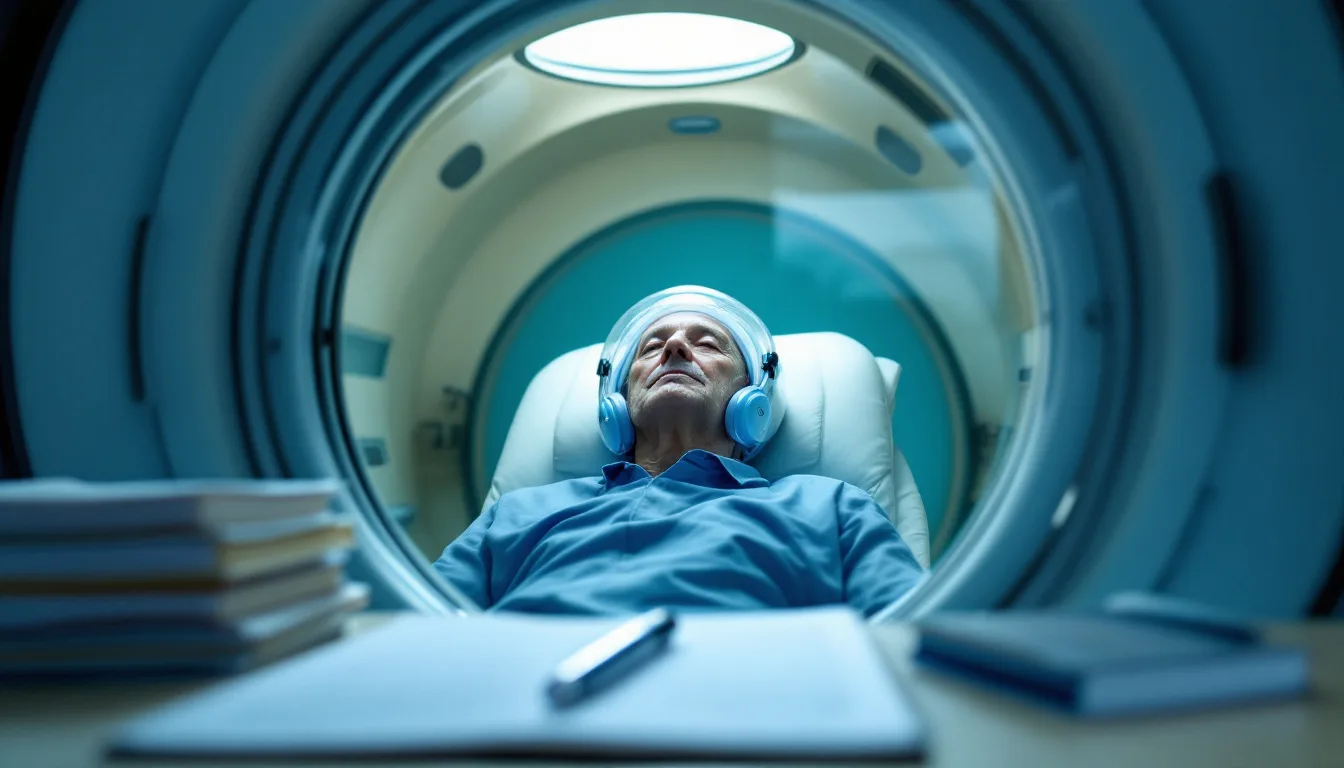
There is a version of hyperbaric oxygen therapy that lives in the clinic and a version that lives in advertising. The clinical version is a device cleared by the US Food and Drug Administration for a specific, finite list of conditions — decompression sickness, carbon monoxide poisoning, stubborn diabetic wounds, late radiation injury. The advertising version claims the chamber does something for the brain: sharper memory, cleared fog, a defence against decline.
A review published on 29 September in the International Journal of Medical Sciences sits uncomfortably between the two. It is a serious, mechanism-heavy piece of academic work, and its opening move is to argue that a whole family of conditions — Alzheimer’s disease, vascular cognitive impairment, traumatic brain injury, stroke — may share one failure mode that a pressurised chamber could plausibly address.
The authors are Wei Tianjiao, Gu Wenhui, Ye Lisha and Wang Guohua, from the department of neurology at Xuanwu Hospital, Capital Medical University in Beijing, and the Institute of Special Environmental Medicine at Nantong University. What they have written is a narrative review, not a trial, and that distinction matters as much as anything else in the paper.
A common thread the authors believe they can see
The argument runs like this. The brain is one of the most oxygen-hungry organs in the body, and it is unusually vulnerable when perfusion falters. Injury to the microcirculation reduces oxygen delivery, which suppresses metabolism, which degrades synaptic function, which ends in neuronal death. The review describes this as a single pathophysiological spine — “cerebral tissue hypoxia, neurovascular unit imbalance, neural network degeneration” — running beneath diseases that clinicians normally treat as separate entities.
That framing is not new, and the review does not pretend otherwise. Its value is in what it does next: it assembles the mechanistic case for hyperbaric oxygen against that spine, and then, in a section most promotional material never reaches, lists what is still missing.
Five mechanisms, one paradox
Under pressure, dissolved oxygen in plasma rises steeply and reaches tissue that red blood cells cannot serve well. From there the review traces five downstream effects: new blood vessel growth and improved cerebral blood flow; neurogenesis and synaptic remodelling through CREB and BDNF signalling; dampening of glial inflammation via the NF-κB pathway; a shift in redox balance toward antioxidant enzymes; and improved mitochondrial oxygen use, with rising NAD⁺ and SIRT1 activation.
The redox part is where the biology gets interesting, because hyperbaric oxygen ought to be pro-oxidant. Flooding tissue with oxygen generates reactive species; too much of that is precisely how oxygen therapy harms lungs and retinas. The review’s answer is the “hyperoxia-hypoxia paradox”: intermittent exposures create bursts of reactive oxygen species that inhibit prolyl hydroxylase, stabilise HIF-1α, and mimic a hypoxic signal during the reoxygenation phase, which in turn triggers antioxidant and regenerative programmes. In other words, the treatment is proposed to work partly by pretending to be the problem.
The authors also state the dose they believe the field should standardise around: 2.0 to 2.5 atmospheres absolute, 60 to 90 minutes per session, once daily, five days a week, for 30 to 40 sessions. They are explicit that this is the range “most evidence supports” rather than a settled protocol, and the risk side of the ledger is not ignored — central nervous system oxygen toxicity and seizures, pulmonary and retinal damage, middle-ear barotrauma, and transient visual changes all appear in the text.
What the ledger of trials actually shows
The clinical section is where the paper’s own numbers do the most honest work. For Alzheimer’s disease, the review cites a meta-analysis of 11 randomised controlled trials covering 847 patients, which found an improvement on the ADAS-Cog scale of about 4.5 points, alongside shifts in oxidative-stress and inflammatory markers. Read the authors’ own gloss on that result: the improvement was “only close to or slightly above the minimum clinically important difference.”
For stroke, the supporting studies are an RCT of 122 elderly patients with acute cerebral infarction, a retrospective analysis of 162 patients in the late chronic phase, and a 30-patient randomised pilot. For traumatic brain injury, the review lists a meta-analysis of randomised trials for which the sample size is recorded as “not clearly reported,” a retrospective study of 15 patients, and a cohort of 26 adults with post-concussion syndrome. Alongside these sit groups with aneurysmal subarachnoid haemorrhage, intracerebral haemorrhage and COVID-19. Much of the mechanistic scaffolding, meanwhile, rests on rodent models.
Then comes the part worth quoting at length. The review’s own design section notes that studies are small, that most are observational or non-randomised, and that selection and measurement bias are hard to control. Its conclusion: the current evidence “is more appropriately viewed as exploratory, generating hypotheses and indicating directions, rather than definitive conclusions.”
The authors go further than many reviewers do. They argue that sham-controlled, double-blinded designs are not optional in this field, “given the strong expectancy and placebo effects associated with chamber-based interventions.” That is a striking concession. Climbing into a sealed vessel and breathing through a hood is a powerful ritual, and the people paying for it expect to feel different. A trial that cannot disguise the treatment cannot separate the gas from the theatre. The review also flags a practical obstacle: because treatment pressures, session lengths and course durations vary so widely between studies, high-quality meta-analysis of the field is barely possible yet.
Where the regulators currently stand
None of this has changed the regulatory picture. Hyperbaric oxygen devices are cleared by the FDA for a defined set of uses — among them decompression sickness, carbon monoxide poisoning, certain non-healing diabetic wounds, late radiation tissue injury, gas gangrene, severe anaemia, compromised skin grafts and flaps, crush injury, thermal burns, idiopathic sudden sensorineural hearing loss and intracranial abscess. Cognitive impairment, mild cognitive impairment and dementia are not on that list, and neither is memory enhancement or anti-ageing. The FDA’s position remains that claims of that kind are unproven.
Regulators have been more attentive to hardware than to cognition of late. In August 2025 the FDA issued a letter to health care providers on the safe use of hyperbaric oxygen therapy devices, describing fire and injury risks — including deaths — associated with chambers operated outside the manufacturer’s instructions, and it continues to point patients toward facilities accredited by the Undersea and Hyperbaric Medical Society.
The part the wellness market will skip
The detail most likely to be lost in the retelling is the dose. The evidence the Beijing authors assemble sits almost entirely at 2.0 to 2.5 atmospheres absolute, in sessions of an hour or more, repeated dozens of times under medical supervision, with screening for contraindications. A lounge session at 1.3 atmospheres in a soft-sided chamber is a different intervention with a far thinner literature behind it. Nothing in this review supports it, and the review is the friendliest recent document the “brain” claim has had.
There is also a logical trap in the placebo concession. If expectancy effects in a chamber are strong enough that the authors demand blinded trials to see past them, then a customer’s sense of clarity after a paid course of sessions is not evidence of anything — it is the exact phenomenon the field is trying to measure around. That does not make the treatment worthless. It means the anecdote cannot carry the claim.
For a patient or a family considering this, the honest summary is narrow. Hyperbaric oxygen has a real, cleared role in a specific list of emergencies and wounds, and a genuinely interesting but unproven hypothesis about cognitive decline. Whether the chamber helps a failing brain is a question that will be settled by the multicentre, randomised, double-blind, sham-controlled trials with validated cognitive endpoints that these authors themselves are asking for — and not by a before-and-after memory test sold with the sessions. Nothing here should be read as medical advice; hyperbaric treatment carries real contraindications and belongs under a physician’s assessment.
Sources
- Wei T, Gu W, Ye L, Wang G. Hyperbaric Oxygen Therapy for Cognitive Impairment Resulting from Neurological Disorders: Mechanisms of Action and Application Advances. International Journal of Medical Sciences. 2026;23(10):3194-3210. doi:10.7150/ijms.128159
- FDA — Follow Instructions for Safe Use of Hyperbaric Oxygen Therapy Devices: Letter to Health Care Providers (August 25, 2025), listed under Medical Device Safety, Letters to Health Care Providers
- Undersea and Hyperbaric Medical Society — HBO Indications (2020)