
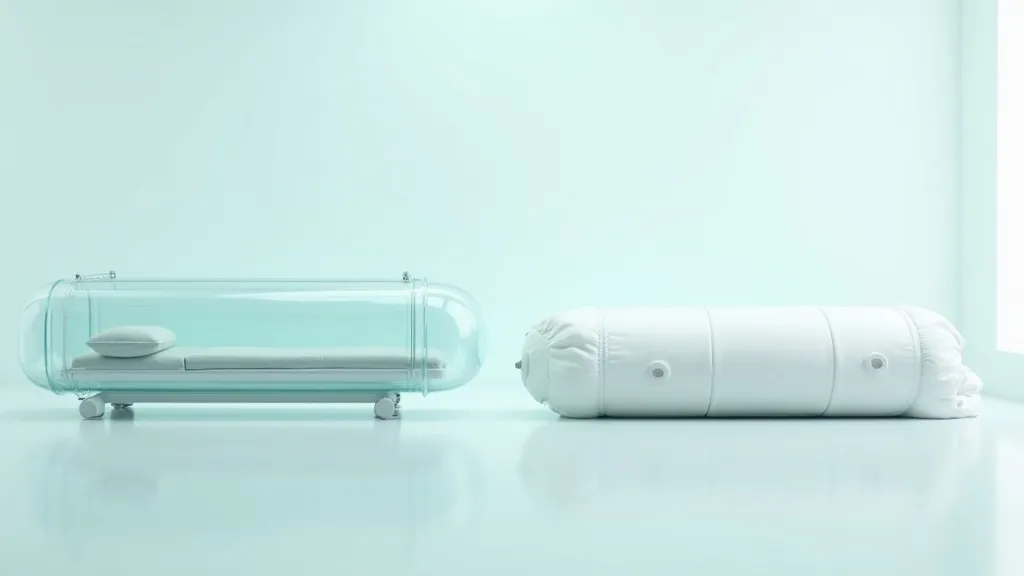
Walk into any wellness expo and you will see two products sharing one name. On one side: rigid steel-and-acrylic vessels that would not look out of place in a hospital. On the other: zippered fabric tubes that inflate like camping gear. Both are sold as “hyperbaric chambers.” From a clinical perspective, the difference between them is not cosmetic — it is the difference between two distinct dose ranges of the same therapy.
The comparison is really about pressure
Nearly every approved indication on the UHMS list — decompression sickness, carbon monoxide poisoning, problem wounds, radiation injury, osteomyelitis — was studied at pressures of 2.0 ATA and above, delivered in rigid chambers under medical supervision. That is the treatment the FDA’s consumer guidance describes, and it is the treatment the Mayo Clinic describes: 100% oxygen at two to three times atmospheric pressure.
Soft-shell chambers cannot reach that range. By design and by regulation, fabric chambers operate at roughly 1.3 to 1.5 ATA, usually on compressed ambient air rather than pure oxygen. Whatever the merits of mild hyperbaric exposure — and there is a genuine, growing wellness literature around it — it is a different dose than the one in the clinical trials that built HBOT’s evidence base.
This is the single fact that should anchor any purchase decision. The question is not “which chamber is better?” It is “which dose am I buying, and does it match what I plan to do with it?”
Where hard-shell systems earn their price
A rigid chamber buys you four things a fabric one cannot deliver:
- Clinical-range pressure. A true 2.0+ ATA capability means the protocols in the published literature are physically reproducible on your equipment. For a clinic that cites research to clients, this is a credibility issue, not a specification detail. A purpose-built hard-shell hyperbaric chamber is the equipment category the clinical evidence base was actually built on.
- Structural durability. Steel vessels built to ASME PVHO-1 last decades. Zippers and seams do not.
- Controlled oxygen delivery. Rigid systems deliver oxygen via masks, hoods, or chamber atmosphere with proper monitoring — with the fire-safety engineering that oxygen-rich environments demand.
- A clinical experience. In a premium facility, the physical presence of the machine is part of how clients read the service. This sounds superficial; operators report it is not.
Where soft-shell systems genuinely fit
None of this makes fabric chambers a scam. A quality soft-shell hyperbaric chamber is the rational choice for a real set of buyers: home users who want convenient, frequent, low-intensity sessions; travelers and athletes who need portability; buyers for whom the entry price of a rigid vessel is simply out of reach. Mild hyperbaric exposure at 1.3–1.5 ATA is its own use case with its own emerging literature — the problems begin only when it is marketed as equivalent to clinical HBOT.
The failure mode to avoid, in both directions, is category confusion: a home user paying hard-shell money for capability they will never use, or — far more common — a buyer expecting 2.0 ATA outcomes from a 1.3 ATA machine because the marketing blurred the line.
A clinician’s shortlist
- Match the pressure to the literature you care about. If the studies behind your use case ran at 2.0 ATA, only a hard-shell system reproduces them.
- Ask what standard the vessel is built to. PVHO-1 or an equivalent recognized pressure-vessel standard, documented, not implied.
- Ask how oxygen is delivered and monitored. The answer tells you more about a vendor’s seriousness than any brochure.
- Price the decade, not the purchase. A steel vessel amortized over 25 years and a fabric chamber replaced twice in that span are closer in real cost than their stickers suggest.
- Be honest about the job. Daily gentle sessions at home and a protocol-driven clinical service line are different jobs. Buy the machine for the job you actually have.
The hard-shell vs soft-shell debate resolves cleanly once it is reframed as a dosing question. The literature tells you what dose does what. The only remaining task is buying the machine that delivers the dose you mean to use.