
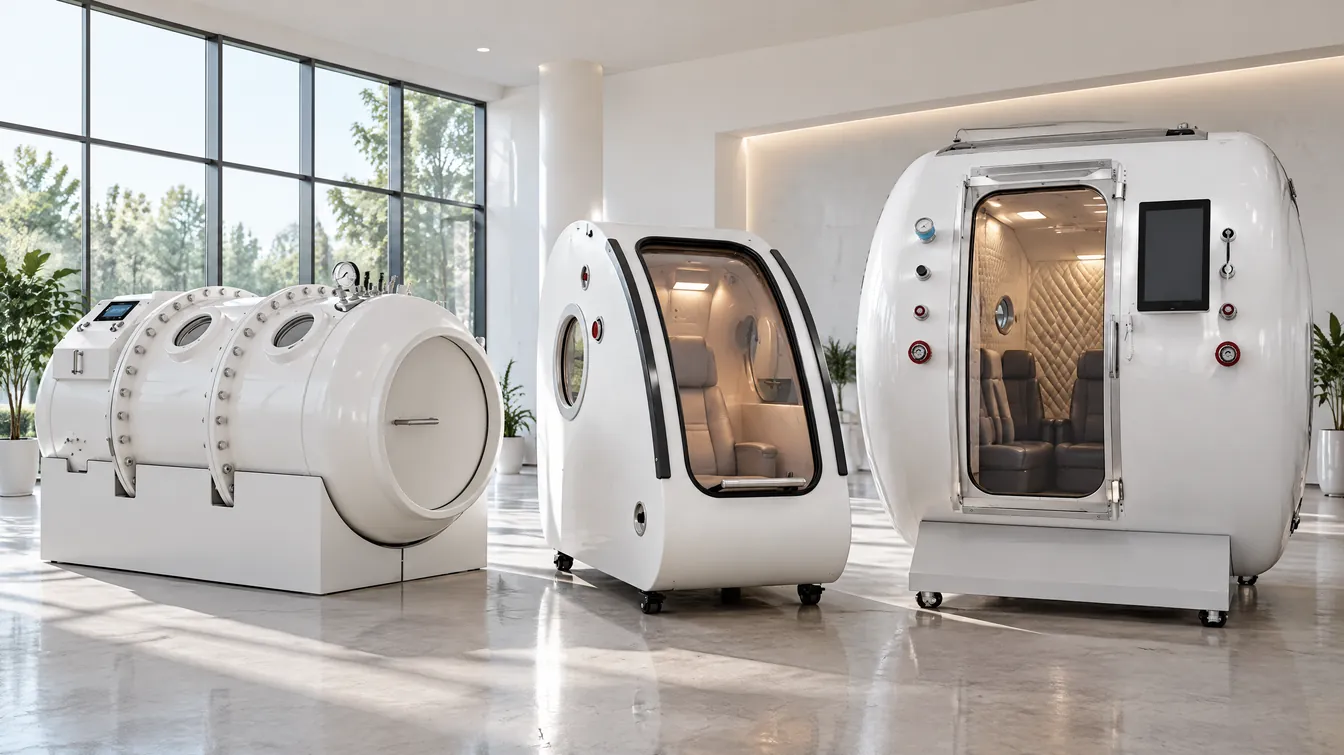
Hard-shell chambers used to be something a buyer met only in a hospital basement. In 2026 they are sold to recovery studios, physiotherapy practices, longevity clinics and, increasingly, to people with a spare room. The marketing has kept pace. The documentation has not always followed.
This publication has already covered what chambers cost, how to approach a home purchase and why the hard-versus-soft decision is really a decision about pressure. This piece does something narrower. We took six manufacturers that sell rigid chambers, from hospital suppliers to direct-to-consumer importers, and put their published claims side by side.
How we compared them
Everything below comes from the manufacturers’ own product pages and data sheets as they stood in October 2026. We did not test any chamber, and where a company does not publish a figure we say so rather than fill the gap from dealer listings or forum posts. The criteria:
- Maximum pressure (ATA). The clinical indications the Undersea and Hyperbaric Medical Society recognises were built on protocols at 2.0 ATA and above. A chamber that tops out at 1.5 ATA is a different product, whatever its shell is made of.
- Occupancy and posture. Lying, seated, single or multi-person. This drives room planning more than any other factor.
- Oxygen delivery. Whether the cabin holds oxygen or air, and whether oxygen arrives by hood, open mask or a built-in breathing system (BIBS) that vents exhaled gas outside. The FDA’s August 2025 letter on chamber fires is why this matters.
- Standards. ASME PVHO-1 is the safety standard for pressure vessels that hold a person. NFPA 99, the health-care facilities code, has a chapter on hyperbaric facilities that governs the room, not just the vessel. In the US, a hyperbaric chamber is a Class II device under 21 CFR 868.5470. We recorded what each maker actually claims: certified, stamped, “tested to”, or nothing.
- Emergency exit. How fast the chamber returns to surface pressure, and whether the occupant can trigger it.
- Footprint, install and warranty. Published dimensions, weight, power and written cover.
- Price transparency. Whether a buyer can see a number before talking to sales.
OxyHealth: Fortius 420 and 420 EXP
OxyHealth homepage, screenshot taken October 2026.
OxyHealth is the best-known US name in the category, and most of its catalogue is soft-shell. Its hard-shell offer is the Fortius 420 family, which the company pitches at treatment centres, hospitals and research facilities rather than living rooms.
The numbers are clinical. OxyHealth lists the Fortius 420 at up to 4.0 ATA (44 psi), with a 42-inch internal diameter, an exterior of 45 by 91 inches and a weight of 1,250 lb. The EXP version splits into sections for buildings with awkward access and weighs 1,400 lb. The occupant lies down and breathes 100% oxygen through a hood or a built-in breathing system. OxyHealth states both models are FDA 510(k) cleared as Class II devices and ASME PVHO-1 certified, “individually stamped and serialized”, and backs them with a five-year parts-and-labour warranty. Installation and training are included. On its home page OxyHealth says it has delivered more than 19,000 chambers since 1997 and that its chambers “typically last 12 to 15 years”. It also tells buyers, correctly, that “FDA-registered does not mean FDA-cleared”.
Price: quote only. The company publishes financing “as low as $198/month” across its range but no Fortius figure.
Editors’ read: the strongest paperwork in this group, and pressure well beyond what any wellness buyer needs. Weight, floor loading and a 91-inch length make it a facility purchase, not a spare-room one.
Sechrist Industries: 3300H, 3600H, 4100H
Sechrist Industries homepage, screenshot taken October 2026.
Sechrist is a hospital supplier, and its H-series monoplaces are what many hospital wound-care units already run. The three models differ mainly in internal diameter: 33, 36 and 41 inches. The 3600H and 4100H take patients up to 700 lb as standard, which no wellness-market chamber we looked at matches. Patients are loaded on a low-profile hydraulic gurney.
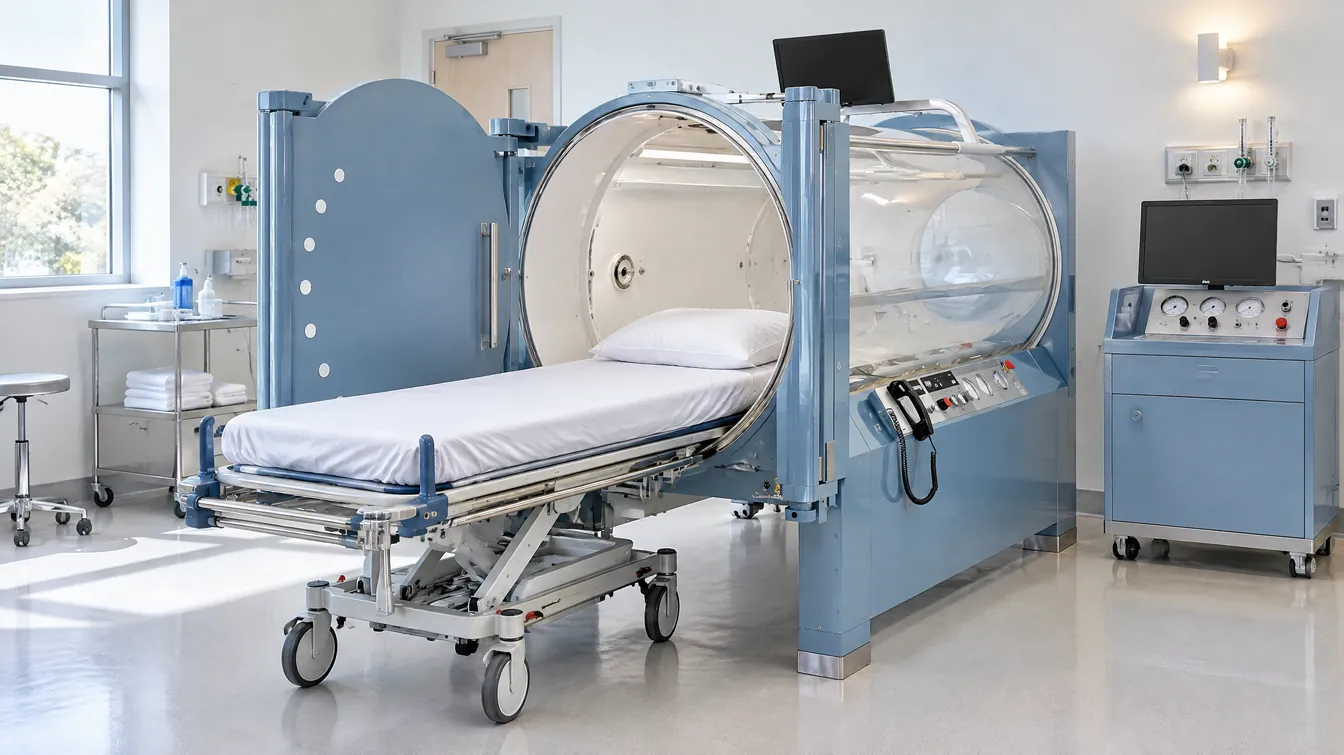
Sechrist’s own 4100H data sheet lists a maximum operating pressure of 30 psig (3.0 ATA), an emergency vent from 30 psig to zero in 119 seconds at most, and design to ASME PVHO-1, ASME Section VIII Division 1 and NFPA 99, with National Board registration. The same sheet lists a patient air-break breathing system, which tells you the cabin gas is oxygen and the mask supplies air for breaks. That is the classic hospital monoplace design, and it is why these chambers live inside facilities with trained hyperbaric staff and fire protocols.
Price: quote only. Sechrist also sells certified pre-owned units.
Editors’ read: the reference point for clinical monoplace hardware. Wrong product for a home, and arguably for any site without hospital-grade oxygen supply and staff.
Perry Baromedical: Sigma 34, 36, 40 and the 40-II
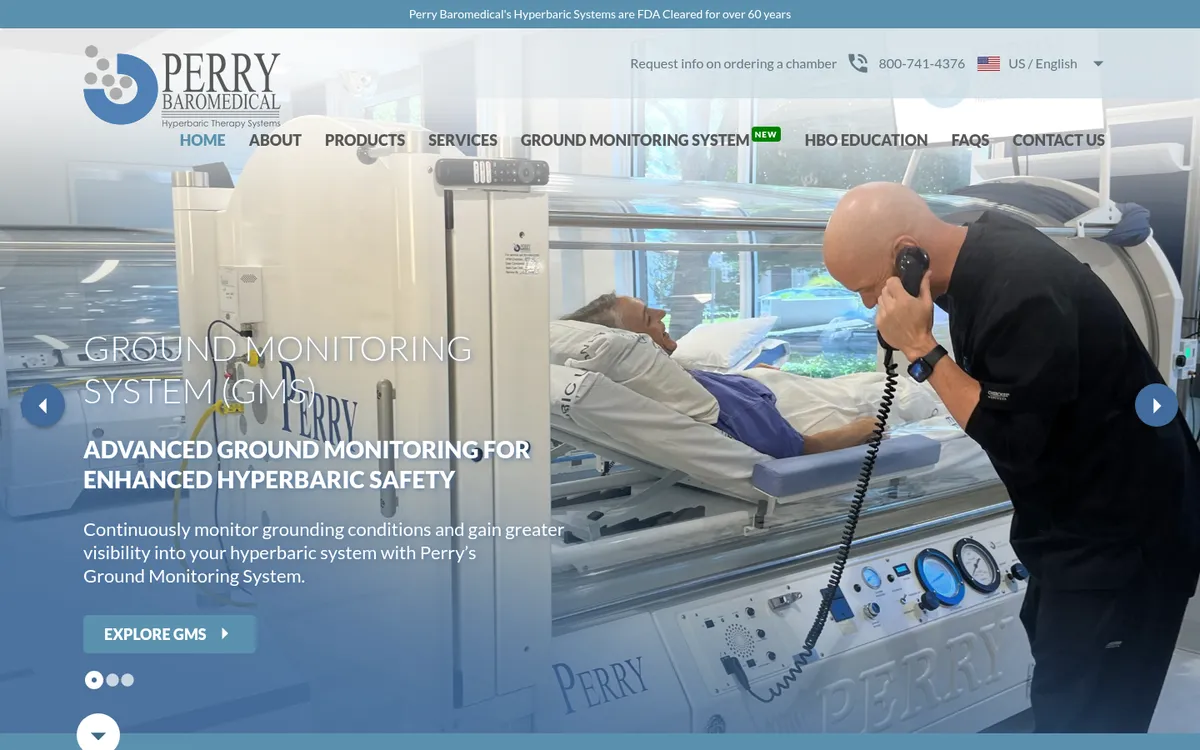
Perry Baromedical homepage, screenshot taken October 2026.
Perry is the other long-standing hospital supplier, and the only one here that makes monoplace, two-person and multiplace systems. It says its systems have been FDA cleared for more than 60 years. The monoplace line runs from the Sigma 34, which Perry says fits through standard doorways, to the Sigma 36 and Sigma 40, both certified for patients up to 700 lb.
The model that matters here is the two-seat Sigma 40-II, the same format as several wellness products. Perry lists a maximum operating pressure of 30 psig (3 ATA), a cabin “pressurized with breathing quality air”, and two seated patients breathing pure oxygen through a built-in breathing system with hoods. The chamber is 108 inches long, 61 inches wide and 81 inches high, weighs about 3,500 lb, and runs on facility air and oxygen supplies. It has a main deluge and a handline for fire suppression, and its emergency depressurisation rate is 3 ATA to ambient in six minutes or less.
Price: quote only, through a pricing request form.
Editors’ read: a genuine clinical two-seater with fire suppression built in, and the plumbing and weight that come with it.
Macy-Pan: HE5000 family and HP800-S
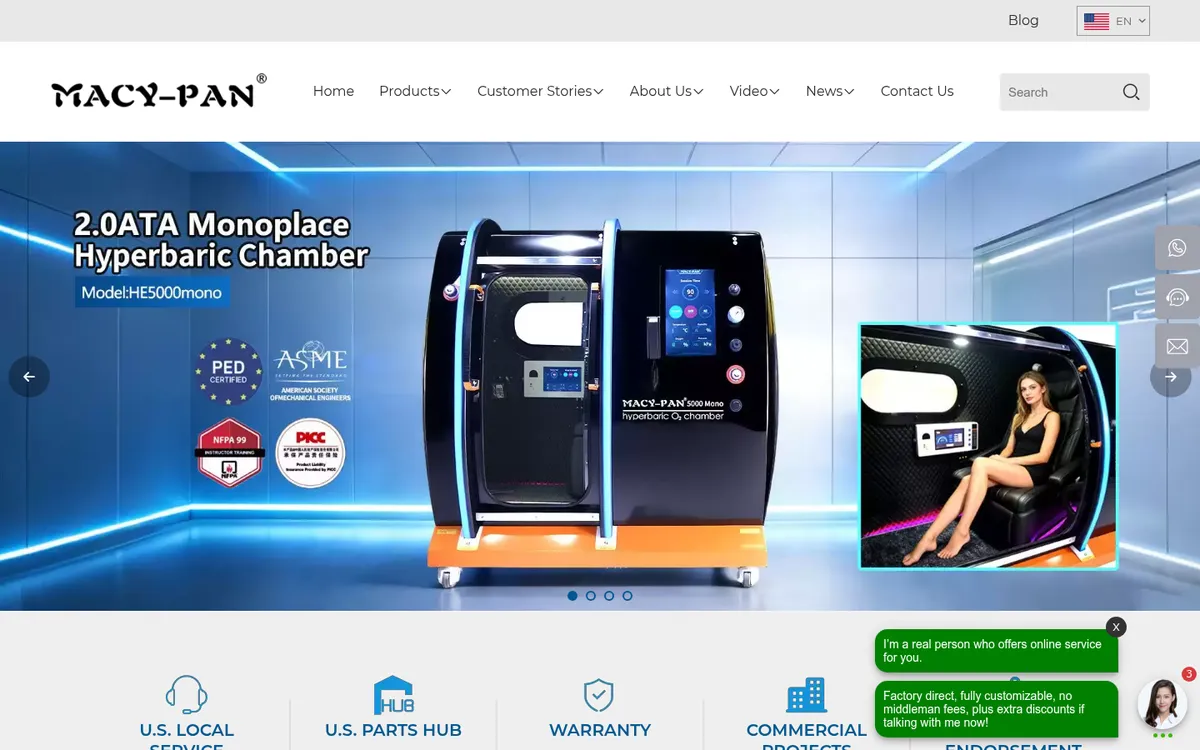
Macy-Pan homepage, screenshot taken October 2026.
Macy-Pan is a Shanghai manufacturer, founded in 2007, that sells worldwide and through US dealers. Its hard-shell range is wide: seated multi-person cabins, a single-seat chamber and lying models.
The HE5000 Standard is a walk-in cabin for one to five people, rated 1.2 to 2.0 ATA, measuring about 82 by 63 by 69 inches, with up to five oxygen headsets. The HE5000 Mono is a one-person version at 1.5 to 2.0 ATA. The newer HP800-S is a single-seat 2.0 ATA chamber listed at 186 by 105 by 210 cm and 550 kg net, with oxygen supplied from a concentrator at 10 L/min and 93% concentration, a water-cooled air conditioner, and a total system draw of 3,300 W. The compressor and concentrator share one cabinet. On the HE5000 pages Macy-Pan describes an emergency decompression valve that can be turned from inside or outside the chamber, an emergency stop button and pressure gauges on both sides of the wall. It lists CE, ISO 9001 and ISO 13485. We found no ASME PVHO-1 claim on the pages we read, and the company itself describes its chambers as “hyperbaric oxygen health equipment or wellness equipment” that “may be used for non-medical purposes”. Warranty wording varies by page, from one year on parts with extended cover available to “lifetime warranty”.
Price: quote only on the manufacturer site.
Editors’ read: the most options per dollar of floor space, especially for multi-seat group sessions. Buyers should ask directly which pressure-vessel standard each specific unit was built and tested to, and get it in writing.
OxyRevo: Quest30, Quest36, Space60
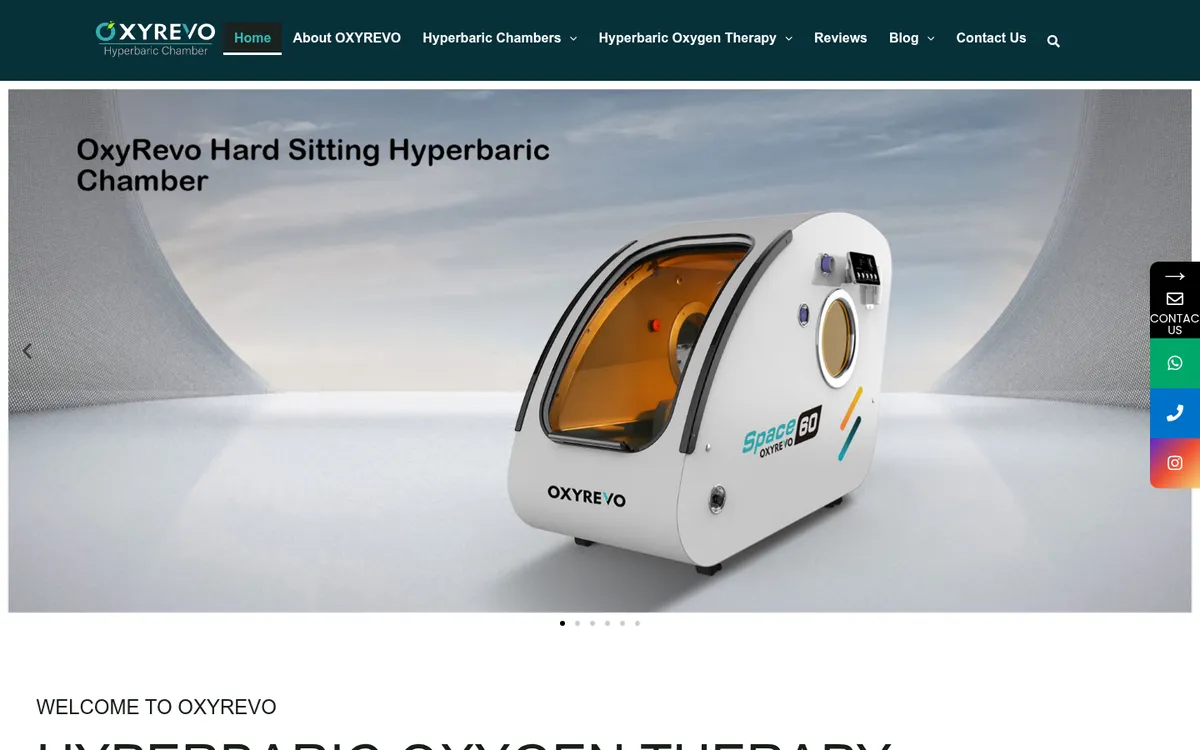
OxyRevo homepage, screenshot taken October 2026.
OxyRevo, based in Hangzhou and trading since 2012, sells direct and through US dealers. Its hard-shell line has two lying stainless-steel chambers and one seated model.
The Quest30 is 89 inches long with a 30-inch diameter and weighs about 507 lb; the Quest36 widens to 36 inches (OxyRevo says it fits “one adult and a child”) at about 573 lb. The Space60 is seated, with a powered reclining chair. All three are sold at 1.5 ATA standard, with 1.6 ATA and up to 2.0 ATA as options. Oxygen comes from a built-in 10 L/min concentrator at 90 to 97% purity, or an optional 20 L unit, delivered by a standard mask or an optional BIBS mask. Control panels and displays sit both inside and outside, so the occupant can run a session alone. One detail from OxyRevo’s own copy is worth knowing whatever you buy: it says that without its “oxygen boosting system” a concentrator’s flow “will drop 50%” once the chamber reaches 2.0 ATA. Ask any vendor what flow actually reaches the mask at full pressure. We found no ASME, PVHO-1 or FDA claim on the product pages we reviewed.
Price: quote only on the manufacturer site, though US dealers do post list prices.
Editors’ read: the lowest likely entry price for a rigid chamber that can reach 2.0 ATA. Note that 2.0 ATA is an upgrade, not the default, and that the certification column is blank.
Superhuman Chambers: L1, X, T2, T4
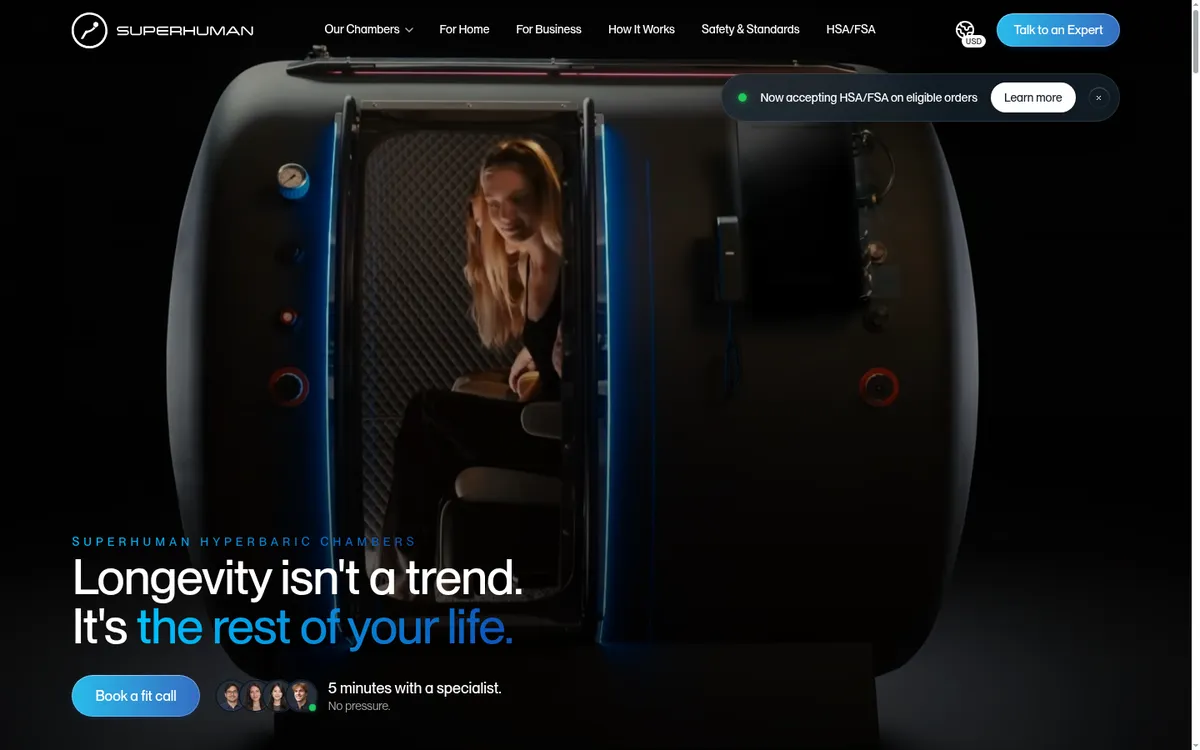
Superhuman homepage, screenshot taken October 2026.
Superhuman sells a hard-shell line to homes and to businesses such as clinics, med spas and gyms, and it is the only company in this group that prints a price on every model. All four hard-shell chambers are rated 2.0 ATA: the single-seat L1 from $49,900, the Superhuman X from $79,900, the two-seat T2 from $99,900 and the four-seat T4 from $169,000 all-inclusive.
We looked hardest at the X, because it is the model built for the “spare room” buyer. It is a seated single-occupant chamber in a 304 stainless steel shell, listed at about 5 ft 7 in by 4 ft 11 in with a 6 ft ceiling, and it runs from a standard 110 to 240 V outlet. The cabin is pressurised with air; oxygen reaches the occupant only through a BIBS mask fed by twin onboard concentrators, so there are no tanks. Superhuman says it pressurises in under 10 minutes, surfaces in under 2, and runs sessions up to 120 minutes, with a depressurisation control within reach of the seat and an intercom.
On paper the documentation is detailed, and the wording deserves a careful read. The company says the shell is certified to ASME Section VIII at the factory, the design is “tested to ASME PVHO-1” with test records on request, the factory holds ISO 13485 and ISO 9001, and CE, PED and UKCA declarations are available. Each unit is pressure-tested to 150% of rated pressure and run for 100 hours before shipping. Warranty is two years, with installation, site checks and training handled by the company. The $79,900 figure is the base chamber; upgrades, shipping and installation are quoted separately.
Editors’ read: the clearest pricing in the market and a sensible air-cabin, BIBS-only oxygen design for non-hospital settings. “Tested to PVHO-1” is not the same phrase as “PVHO-1 certified and stamped”, so buyers who need the latter for a clinic or an insurer should ask for the test record and the vessel paperwork before signing. The company invites exactly that.
Lying or seated: the layout decision
Most buying advice on this topic stops at “hard or soft”. For a buyer who has already chosen hard, the next fork is posture, and it decides the room.
Lying monoplaces, from the hospital units to OxyRevo’s Quest tubes, run 89 to 108 inches long. They need a straight run of floor and clearance at the end door, and they suit people who want to sleep through a session. The clinical versions also accept monitoring lines, which no wellness chamber here advertises.
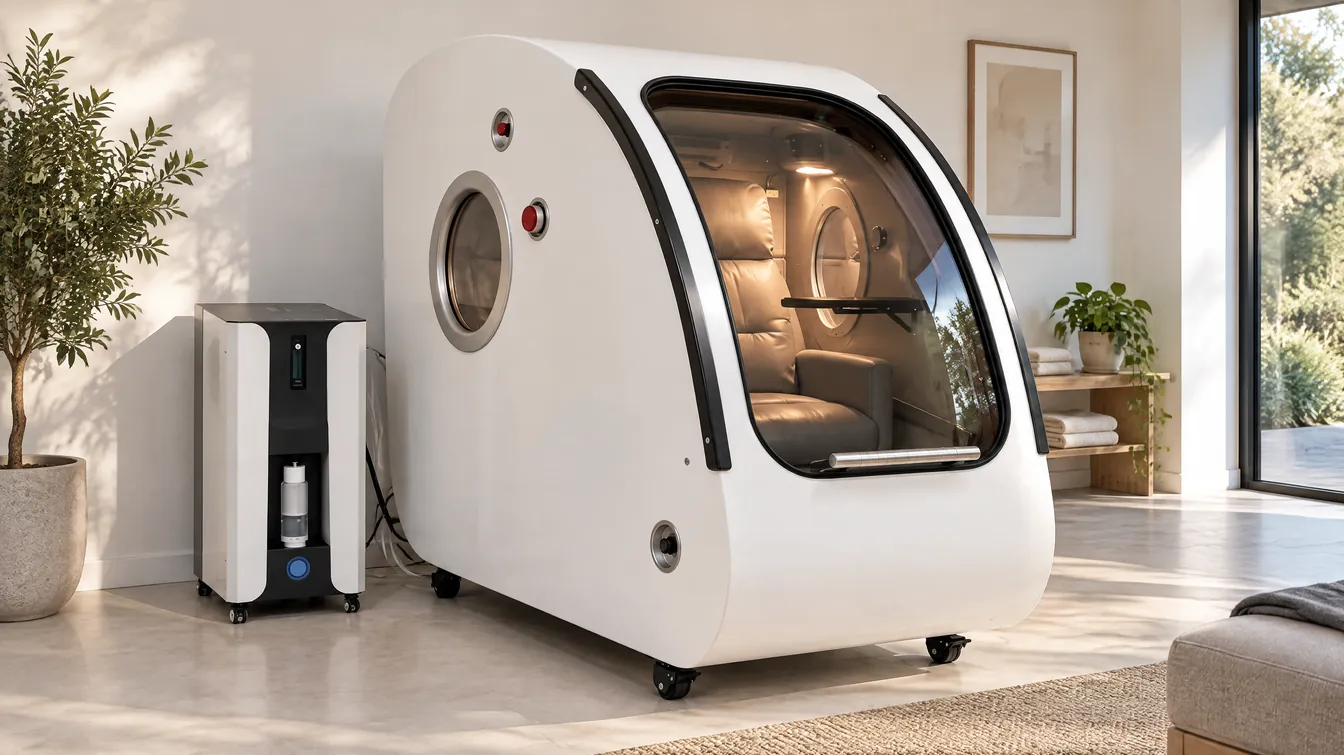
Seated chambers trade length for height. The Superhuman X is listed at roughly 5 ft 7 in by 4 ft 11 in with a 6 ft ceiling, and Macy-Pan’s HP800-S at 186 by 105 by 210 cm. Either fits a corner of an ordinary room, and you step in through a door rather than sliding in on a tray, which helps older users and anyone who dislikes lying in a tube. The cost is height: check ceiling clearance, stair turns and space for the equipment cabinet first.
The two-seat question
Two-person rigid chambers are where clinical and wellness designs meet, and the contrast is instructive. Perry’s Sigma 40-II and Superhuman’s T2 both seat two people and both fill the cabin with air, with oxygen by hood or mask. The Perry is a 3 ATA, 3,500 lb hospital installation. The T2 is rated at 2.0 ATA (1.5 selectable), Superhuman lists its footprint at 6 ft 10 in by 5 ft 5 in with about a 6 ft ceiling, needs no oxygen tanks, runs 30- to 120-minute sessions and can be depressurised from inside. Macy-Pan’s HE5000 cabins go further on headcount, up to five seats at 2.0 ATA.
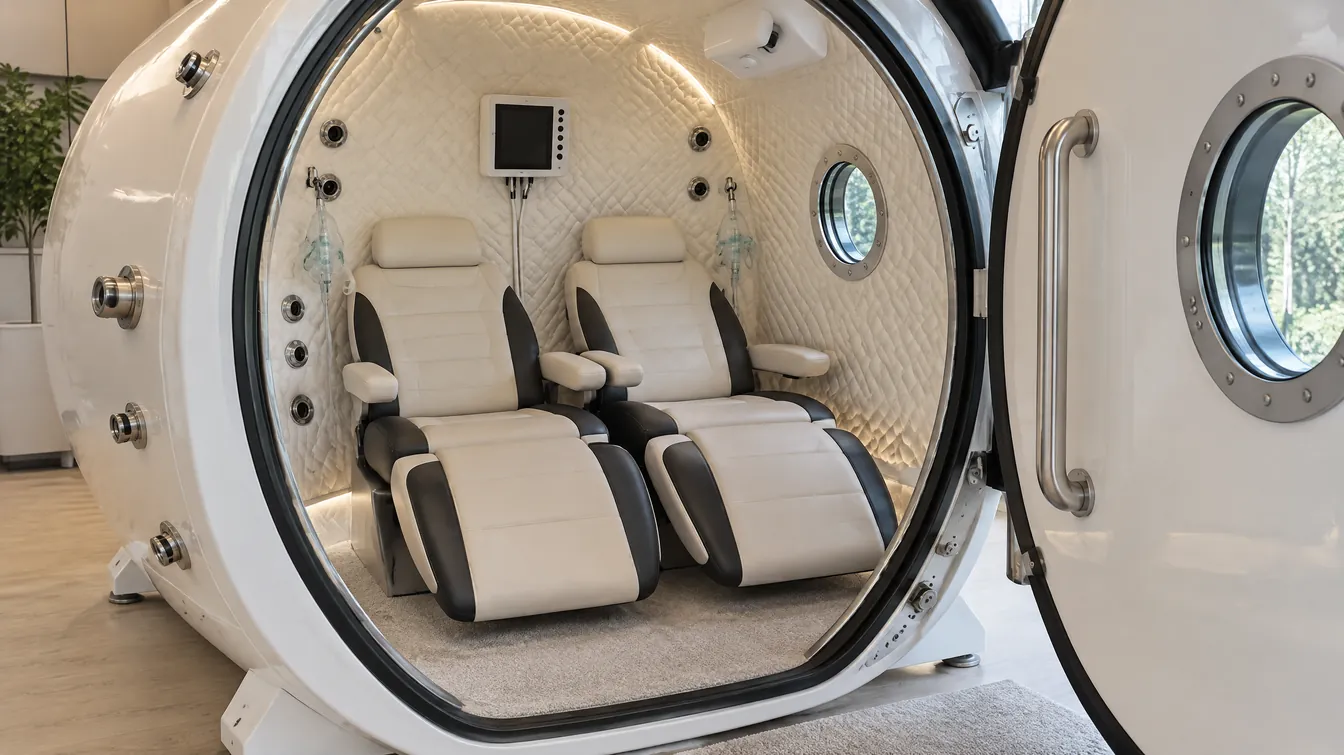
For a clinic, the second seat roughly doubles session capacity per hour of staff time. It also lets a companion ride along with a nervous first-timer or a child, something a monoplace cannot offer at any price.
Side by side
| OxyHealth Fortius 420 | Sechrist 4100H | Perry Sigma 40-II | Macy-Pan HE5000 / HP800-S | OxyRevo Quest / Space60 | Superhuman X (and T2/T4) | |
|---|---|---|---|---|---|---|
| Max pressure | 4.0 ATA | 3.0 ATA | 3 ATA | 2.0 ATA | 1.5 ATA std, 2.0 ATA option | 2.0 ATA |
| Occupancy | 1, lying | 1, lying (gurney) | 2, seated | 1–5 seated; 1 seated | 1 lying; 1 seated | 1 seated (2 and 4 on T2/T4) |
| Cabin gas / O2 delivery | Air cabin; hood or BIBS | Oxygen cabin; air-break mask | Air cabin; BIBS hoods | Air cabin; headsets, concentrator (93%, 10 L/min on HP800-S) | Air cabin; mask or BIBS, concentrator (90–97%) | Air cabin; BIBS mask, twin concentrators |
| Oxygen supply | Not published | Facility oxygen | Facility oxygen and air | Built-in concentrator | Built-in concentrator | Built-in concentrators, no tanks |
| Emergency exit | Not published | 30 psig to 0 in ≤119 s | 3 ATA to ambient in ≤6 min | Manual valve inside or outside | Controls inside and outside | Depressurisation control at the seat; surfaces in under 2 min |
| Vessel standard claimed | ASME PVHO-1 certified, stamped; FDA 510(k) | ASME PVHO-1, Section VIII, NFPA 99 | FDA cleared (per Perry) | CE, ISO 9001/13485 | None found | Section VIII; tested to PVHO-1; ISO 13485; CE/UKCA |
| Footprint (published) | 45 × 91 in, 1,250 lb | 107 in long, 3,500 lb | 108 × 61 × 81 in, ~3,500 lb | 82 × 63 × 69 in; 186 × 105 × 210 cm | 89 in long, 30–36 in dia. | 5 ft 7 in × 4 ft 11 in, 6 ft ceiling |
| Warranty | 5 years | Ask | Ask | 1 year to “lifetime” (varies) | Ask | 2 years |
| Price published | Quote only | Quote only | Quote only | Quote only | Quote only | From $79,900 (X) |
How to check the paperwork before you sign
Every brochure says “medical grade” somewhere. Four written requests cut through it:
- The FDA 510(k) clearance letter, or a plain statement that there is none. Hyperbaric chambers are Class II devices under 21 CFR 868.5470. Registration with the FDA is not clearance. If a seller says “FDA approved”, ask for the K-number and look it up.
- The ASME PVHO-1 documentation for your serial number. “Built to”, “tested to” and “certified and stamped” are three different claims. Ask which one applies, and for the record that backs it.
- The fire-safety design. Is the cabin filled with air or oxygen? Where does exhaled oxygen go? A clinic will also need to show its room meets NFPA 99.
- What reaches the mask at full pressure. Concentrator flow and purity at 1 ATA is not the same as at 2.0 ATA. Ask for the figure under load.
Who should buy what
A hospital wound-care unit or an accredited hyperbaric centre already knows its shortlist. Sechrist, Perry and the OxyHealth Fortius are built for that world: pressures above 2.0 ATA, full clinical paperwork, and in Sechrist’s case an oxygen-filled cabin that assumes trained staff and NFPA 99 fire controls in the room.
A private clinic, physio practice or med spa that wants rigid-chamber pressure without hospital plumbing is choosing between Superhuman, Macy-Pan and the OxyHealth Fortius. If seeing a price before the first sales call matters, and if multi-seat capacity might come later, Superhuman’s range is the easiest to plan around. If group sessions are the business model from day one, Macy-Pan’s HE5000 cabins are built for it, but get the vessel standard confirmed in writing.
A home buyer with a small room should look at seated single-occupant chambers: the Superhuman X, Macy-Pan’s HP800-S or OxyRevo’s Space60. Of these, only Superhuman publishes a price and a vessel-standard claim. OxyRevo will likely be the cheapest route to 2.0 ATA, as long as the buyer is comfortable with the gap in documentation.
Anyone buying for a medical condition should stop and talk to a physician first. The FDA has cleared hyperbaric devices for a defined list of uses, and most wellness uses are not on it. A rigid shell does not change that, and neither does a higher pressure rating.
Whatever the brand, the FDA’s 2025 letter applies: follow the manufacturer’s instructions, keep trained people present and monitor the occupant for the whole session.
Questions buyers ask
Is 2.0 ATA enough, or do I need 3.0? Mayo Clinic describes clinical treatment as two to three times normal pressure. The hospital chambers here reach 3 or 4 ATA for emergency indications. Every chamber sold into homes and studios in this group stops at 2.0 ATA.
How much space does a hard-shell chamber need? Lying chambers need a straight run of roughly 8 to 9 feet plus door clearance. Seated singles need a footprint of about 5½ by 5 feet and a 6 ft or higher ceiling. Hospital units weigh 1,250 to 3,500 lb, which makes floor loading a structural question.
How long does one last? OxyHealth claims its chambers typically last 12 to 15 years. Written warranties in this group run from one year (Macy-Pan’s HP800-S page) to two years (Superhuman) and five years (OxyHealth Fortius). Treat the warranty, not the brochure lifespan, as the number to plan around.
Is a hard-shell chamber safe to run at home? Mayo Clinic lists ear pain, middle-ear injury and claustrophobia among the side effects, and notes that oxygen-rich environments raise fire risk. An air-filled cabin with oxygen delivered by a BIBS mask reduces the oxygen in the room air, but it does not replace the rules: no heat-producing devices inside, approved clothing, and a trained adult nearby for every session.
Do I need a prescription? It depends on the device’s regulatory status and local rules, so ask the seller in writing before you order.
Sources
- ASME — PVHO-1, Safety Standard for Pressure Vessels for Human Occupancy
- NFPA 99 — Health Care Facilities Code (code development page)
- eCFR — 21 CFR 868.5470, Hyperbaric chamber (Class II)
- FDA — Follow Instructions for Safe Use of Hyperbaric Oxygen Therapy Devices: Letter to Health Care Providers (25 August 2025)
- Undersea and Hyperbaric Medical Society — HBO2 Indications
- Mayo Clinic — Hyperbaric oxygen therapy